
Station Five — Central Area
This open interior space was the center of daily life inside Fort Duffield. Soldiers drilled here, formed for inspection, received orders, stacked arms, and gathered around campfires during the long winter of 1861–62.
You Are Here
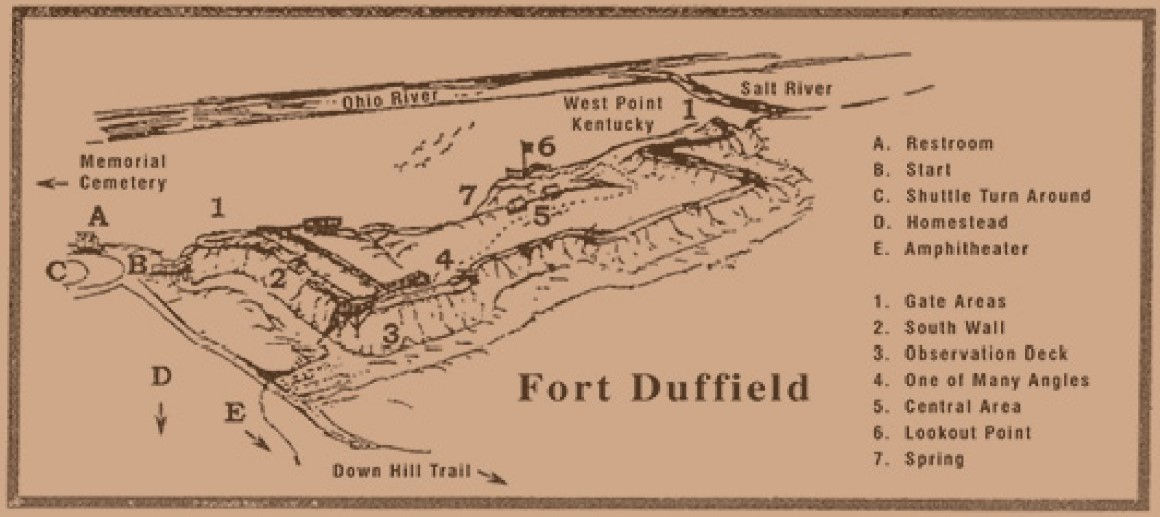
Station Five highlighted on Walking Tour map
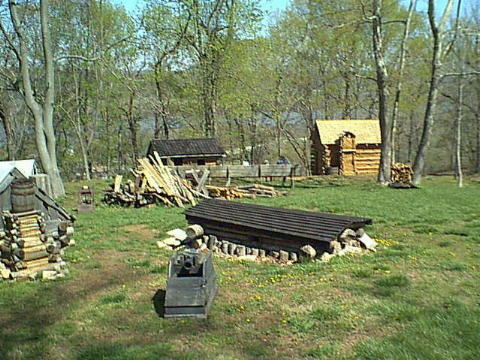
Parade Ground
The central area served as the fort’s parade ground. Here, the 9th Michigan Infantry and other units practiced formations, marching, and musket drill. Officers used this space to issue commands, conduct roll call, and maintain discipline.
Company Streets
Rows of log huts once lined this area. Each hut housed a squad of soldiers. The structures were built quickly using timber cut from the hillside, with roofs of split shingles and chimneys made from stone and mud.
Soldiers slept on straw, shared blankets, and endured bitter cold winds sweeping across the ridge.
Daily Life
- Morning roll call and inspection
- Drill and musket practice
- Mess call and meal preparation
- Camp maintenance and wood gathering
- Evening fires and letters home
Life in the central area was a mix of routine, hardship, and camaraderie. Soldiers passed time by singing, carving wood, writing letters, and sharing stories of home.
Winter Hardships
The winter of 1861–62 was severe. Snow, freezing rain, and relentless wind battered the fort. Soldiers struggled to stay warm, and sickness spread quickly in the cramped huts.
Despite the conditions, the men maintained the fort, guarded the supply line, and kept watch over the valley below.
Listen: Central Area Audio
The Battle of the Pick‑Ax
One of the most memorable stories from Fort Duffield is the “Battle of the Pick‑Ax,” a humorous but revealing incident described by Bennett. During construction, tempers flared between soldiers and civilian laborers over tools, work pace, and authority.
A dispute over a pick‑ax escalated into a chaotic scuffle. Soldiers rushed in, civilians shouted, and for a moment it looked like a full‑scale brawl. Officers intervened, order was restored, and the fort’s construction continued — but the story lived on as a favorite tale among the men.
Though lighthearted, the incident shows the stress and exhaustion of building a massive fort on a steep ridge during cold weather, with limited tools and constant pressure to finish quickly.
Listen: Battle of the Pick‑Ax Audio
Conclusion
The central area was the living heart of Fort Duffield. Every soldier who served here walked these grounds, drilled on this soil, and endured the winter within sight of the Ohio River. Their work and sacrifice helped secure Kentucky for the Union during a critical phase of the Civil War.
Charles W. Bennett, Historical Sketches of the Ninth Michigan Infantry (1913). Provides firsthand descriptions of Fort Duffield’s construction, daily life, and humorous incidents such as the Battle of the Pick‑Ax.
Station Five — Central Area
This open interior space was the center of daily life inside Fort Duffield. Soldiers drilled here, formed for inspection, received orders, stacked arms, and gathered around campfires during the long winter of 1861–62.
You Are Here
Station Five highlighted on Walking Tour map
Parade Ground
The central area served as the fort’s parade ground. Here, the 9th Michigan Infantry and other units practiced formations, marching, and musket drill. Officers used this space to issue commands, conduct roll call, and maintain discipline.
Company Streets
Rows of log huts once lined this area. Each hut housed a squad of soldiers. The structures were built quickly using timber cut from the hillside, with roofs of split shingles and chimneys made from stone and mud.
Soldiers slept on straw, shared blankets, and endured bitter cold winds sweeping across the ridge.
Daily Life
- Morning roll call and inspection
- Drill and musket practice
- Mess call and meal preparation
- Camp maintenance and wood gathering
- Evening fires and letters home
Life in the central area was a mix of routine, hardship, and camaraderie. Soldiers passed time by singing, carving wood, writing letters, and sharing stories of home.
Winter Hardships
The winter of 1861–62 was severe. Snow, freezing rain, and relentless wind battered the fort. Soldiers struggled to stay warm, and sickness spread quickly in the cramped huts.
Despite the conditions, the men maintained the fort, guarded the supply line, and kept watch over the valley below.
Listen: Central Area Audio
The Battle of the Pick‑Ax
One of the most memorable stories from Fort Duffield is the “Battle of the Pick‑Ax,” a humorous but revealing incident described by Bennett. During construction, tempers flared between soldiers and civilian laborers over tools, work pace, and authority.
A dispute over a pick‑ax escalated into a chaotic scuffle. Soldiers rushed in, civilians shouted, and for a moment it looked like a full‑scale brawl. Officers intervened, order was restored, and the fort’s construction continued — but the story lived on as a favorite tale among the men.
Though lighthearted, the incident shows the stress and exhaustion of building a massive fort on a steep ridge during cold weather, with limited tools and constant pressure to finish quickly.
Listen: Battle of the Pick‑Ax Audio
Conclusion
The central area was the living heart of Fort Duffield. Every soldier who served here walked these grounds, drilled on this soil, and endured the winter within sight of the Ohio River. Their work and sacrifice helped secure Kentucky for the Union during a critical phase of the Civil War.
Charles W. Bennett, Historical Sketches of the Ninth Michigan Infantry (1913). Provides firsthand descriptions of Fort Duffield’s construction, daily life, and humorous incidents such as the Battle of the Pick‑Ax.