
Spiritual Leadership on the Ridge
During the Civil War, chaplains lived a life defined by service, strain, and steadfast
devotion. They carried no weapons, yet walked into every hardship the regiment faced —
sickness, fear, grief, and the daily grind of camp life. Their ministry was not confined to Sunday;
it was a constant presence in the lives of soldiers who often felt far from home and far from hope.
At Fort Duffield, this story belongs to Chaplain James G. Portman of the 9th Michigan
Infantry and Chaplain John Hogarth Lozier of the 37th Indiana. Their personalities
could not have been more different, yet together they represent the full spectrum of chaplaincy:
quiet pastoral care and energetic morale‑building.
The Duffield Family & “Stand Up for Jesus”
Fort Duffield’s story is uniquely tied to one of the most famous hymns of the Civil War era:
“Stand Up, Stand Up for Jesus.” The hymn was written in 1858 by Rev. George
Duffield Jr., a respected Presbyterian minister from Detroit — and the father of
Colonel William W. Duffield, commander of the 9th Michigan Infantry.
Rev. Duffield composed the hymn after the death of his friend, Rev. Dudley Atkins Tyng, who urged
believers to “stand up for Jesus” shortly before his passing. The hymn spread rapidly through northern
congregations and became one of the most beloved religious songs sung by Union soldiers.
— Rev. George Duffield Jr., 1858
Many of the men who built Fort Duffield grew up singing this hymn in Michigan churches. Its themes of
courage, duty, and steadfast faith resonated deeply with volunteers facing the cold, sickness, and
hardship on Muldraugh’s Hill.
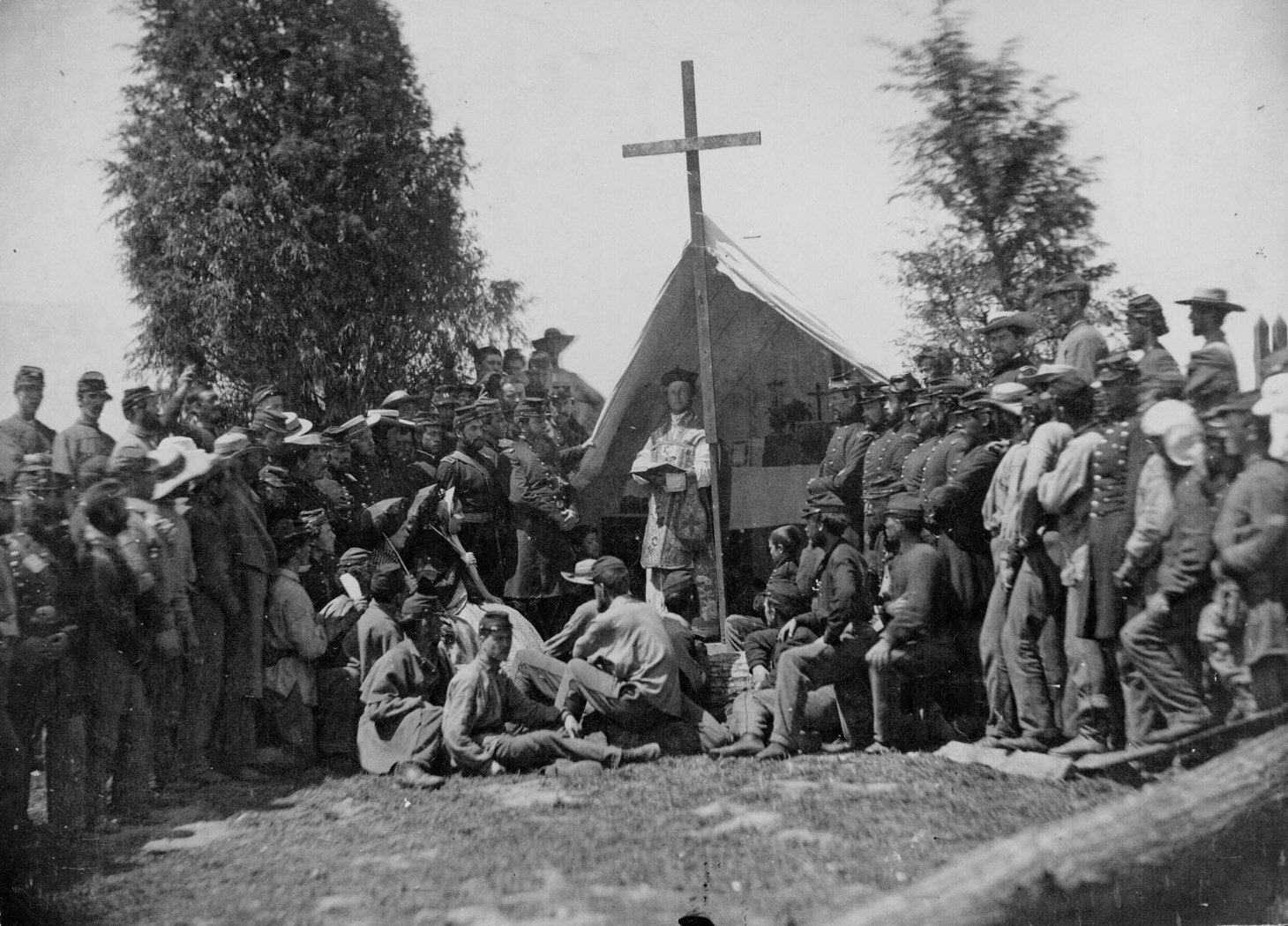
A period depiction of a Civil War chaplain conducting worship in camp — a scene that reflects
the daily reality of ministry at Fort Duffield.
A Ministry Without Walls
Civil War chaplains rarely had a church building. Their sanctuary was wherever the regiment happened
to be — a muddy hillside, a clearing in the woods, a tent crowded with coughing men, or the quiet
ridge above West Point.
Worship might be held in rain or snow, with men standing hatless in the wind. Hymns rose from tired
voices, sometimes accompanied by the distant rumble of artillery.
Chaplains preached, prayed, visited the sick, wrote letters for the dying, and conducted funerals in
all weather. They marched when the regiment marched, slept where the regiment slept, and endured the
same cold, hunger, and disease that swept through every camp from Kentucky to Virginia.
Hardships of the Chaplains
Physical Hardship
Chaplains lived in the same conditions as the men: canvas tents, muddy roads, poor rations, and exposure
to Kentucky’s winter storms. They spent long hours in hospital tents, surrounded by fever, dysentery,
pneumonia, and measles — the same sickness that struck Fort Duffield in the winter of 1861–62.
Emotional Hardship
Chaplains carried the emotional weight of the regiment. They stood at countless deathbeds, listened to
final words meant for distant families, and wrote letters home describing how a son or brother died.
They conducted burials on cold hillsides, sometimes several in a single week.
Social Hardship
Not all soldiers trusted chaplains. Some saw them as unnecessary; others expected them to be miracle‑workers.
Chaplains had to earn respect through presence — by walking the same muddy roads, eating the same poor
rations, and showing up whenever a soldier needed them.
Spiritual Hardship
War tested their faith. Chaplains struggled with doubt, sorrow, and the sheer scale of suffering. Yet they
were expected to remain steady, hopeful, and strong — even when they felt none of those things.
Chaplain James G. Portman
Quiet Strength of the 9th Michigan
Portman left no published writings, but his voice survives through regimental records, surgeon’s notes,
and soldier recollections. These sources paint a picture of a gentle, steady presence during the
regiment’s darkest winter.
and offering quiet counsel.”
— Surgeon’s notes, 9th Michigan
silently from cot to cot with words of comfort.”
— Winter 1861–62 regimental reports
cold wind on the ridge above the river.”
— Michigan Adjutant General’s records
when words failed.”
— Soldier recollection
Portman embodied the pastoral side of chaplaincy: calm, compassionate, and unwavering.
Chaplain John Hogarth Lozier
The Fighting Chaplain — Humor, Energy, and Heart
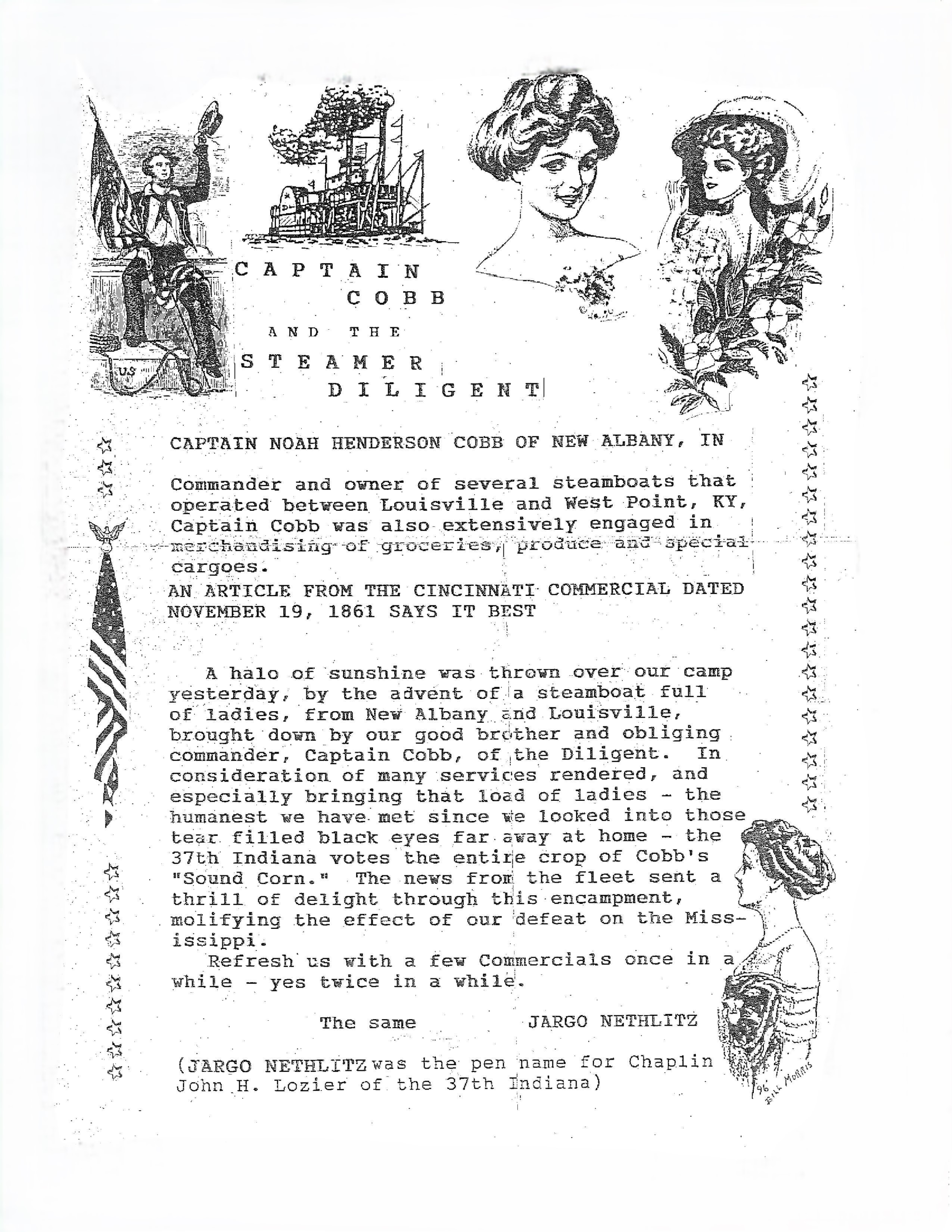
lifted the spirits of soldiers on Muldraugh’s Hill.
Lozier, by contrast, was a force of nature. A gifted storyteller and performer, he later became
nationally famous for his dramatic lectures. His writings — now public domain — give us a vivid,
authentic voice.
Lozier brought humor, energy, and a booming voice that lifted spirits even in misery. He believed that
laughter was as important as prayer in sustaining morale.
Cpt. Cobb & the Ladies’ Visit
One of Lozier’s most charming accounts involves Captain Noah Henderson Cobb, commander
of the steamer Diligent. Cobb escorted a group of local ladies up the ridge to visit the
soldiers — a rare moment of gentleness and civility during the harsh early winter of 1861–62.
brought down by our good brother and obliging commander, Captain Cobb.”
— Chaplain John H. Lozier (“Jargo Nethlitz”), Cincinnati Commercial, Nov. 19, 1861
Lozier’s humorous description shows how deeply the soldiers appreciated the visit. The presence of the
ladies broke the monotony of camp life and reminded the men of home, civility, and the world beyond the
hardships of military service.
In gratitude, the soldiers jokingly voted Cobb “the entire crop of Sound Corn,” a playful compliment
meaning he was a man of exceptional quality. The story remains one of the most humanizing glimpses into
early‑war life at West Point.
Why Chaplains Mattered at Fort Duffield
Together, Portman and Lozier show the full range of spiritual leadership in the Civil War. Portman
offered quiet strength during sickness and sorrow. Lozier brought vitality and encouragement during
hardship and fatigue.
Their work shaped the emotional landscape of Fort Duffield just as surely as soldiers shaped its
earthworks.
Chaplains reminded men that they were more than soldiers — they were human beings with families, hopes,
and souls worth tending. Their presence brought dignity to suffering and meaning to sacrifice.