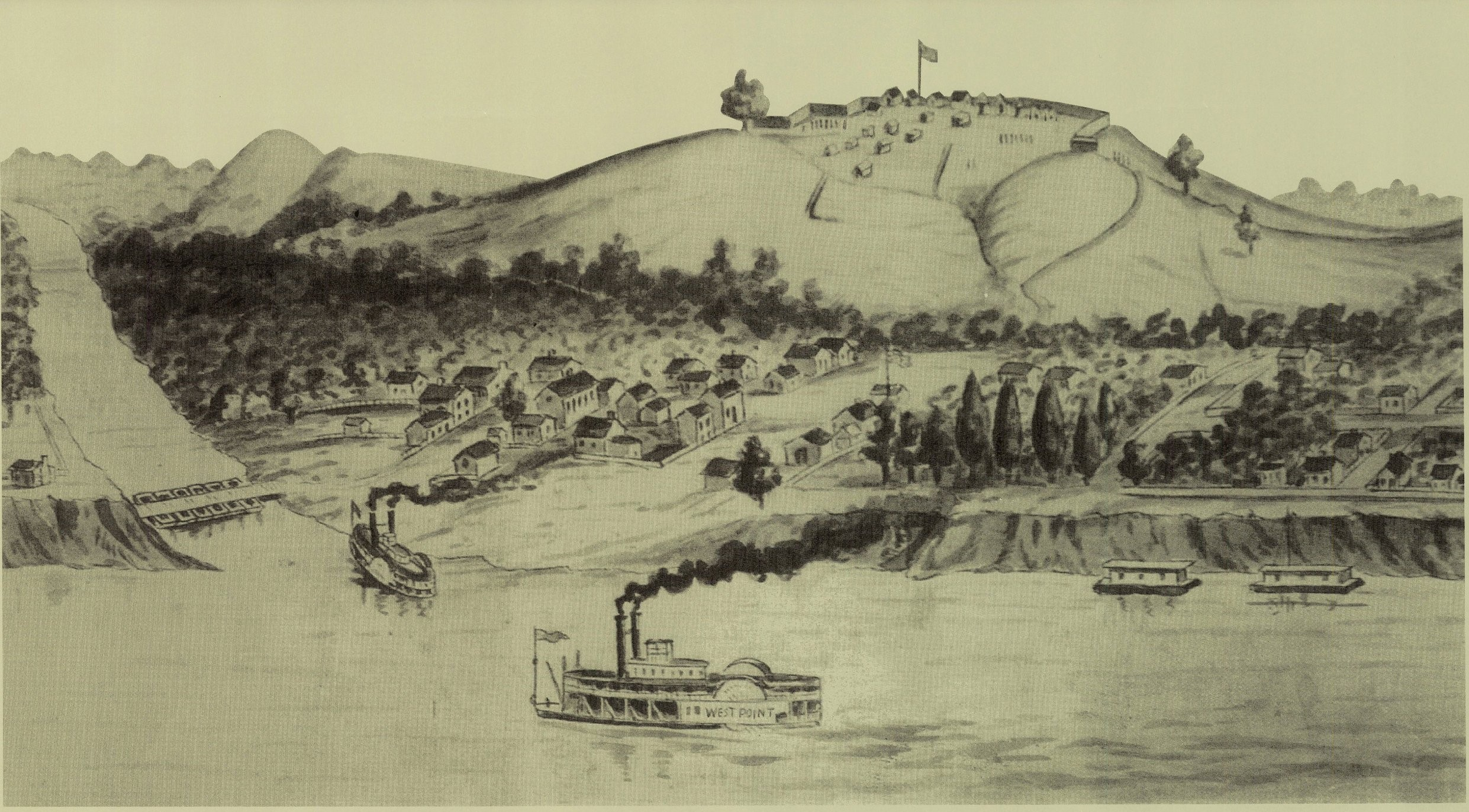
Construction of Fort Duffield
How soldiers of the 9th Michigan and 1st Wisconsin carved a defensive stronghold from the ridge above West Point during the winter of 1861–62.
Explore Fort Duffield
Follow the fort’s early development, learn about the people connected to it, or explore the
research and primary sources that reveal its story.
Origins & Early History
How Fort Duffield was built, why it mattered, and the role it played in the opening year of the Civil War.
Construction of the Fort
The labor, engineering, and hardship behind building Kentucky’s largest Civil War earthwork.
Research & Primary Sources
Letters, maps, reports, and archaeological studies that help reconstruct the fort’s layout and daily life.
Timeline 1861–1862
A chronological look at the military buildup, construction, and troop movements that shaped Fort Duffield.
Garrison Life
Daily routines, hardships, slang, and the lived experience of soldiers stationed at Fort Duffield.
Burials & Departure
The losses, burials, and final days of the 9th Michigan at Fort Duffield.
Arrival at West Point

The 9th Michigan Infantry reached West Point on October 28, 1861, after traveling down the Ohio River.
They camped on the flats near the Salt River, where wet ground, exposure, and disease quickly took a toll.
“It was the most fatal camp we ever had, for we buried sixty-one men on the hill near there within a few weeks.”
From this vulnerable position, officers surveyed the towering ridge above the rivers and recognized its strategic value.
The order soon came: occupy the heights and build a fort.
Why the Fort Was Built
Kentucky’s status as a border state made it a critical battleground for influence. Confederate forces were active in the region,
and Union leadership feared an attack on Louisville—a major supply hub. The ridge above West Point offered a commanding view of
the Salt and Ohio Rivers and the Louisville & Nashville Railroad.
“The ridge provided a natural defensive position that could secure the river crossings and the railroad.”
General William Tecumseh Sherman approved the construction of a fort to secure the region and protect the Union’s supply lines.
Who Built the Fort
The primary labor force consisted of the 9th Michigan Infantry and the 1st Wisconsin Infantry. Many were new recruits with little
experience, yet they were tasked with transforming a rugged ridge into a fortified stronghold.
“Armed with axes, shovels, and determination, they cleared trees, dug trenches, shaped earthworks, and constructed defensive walls.”
The winter of 1861–62 was harsh. Exposure, pneumonia, and dysentery spread rapidly through the camps, and many of the men who built
the fort never lived to see it completed.
How the Fort Was Built
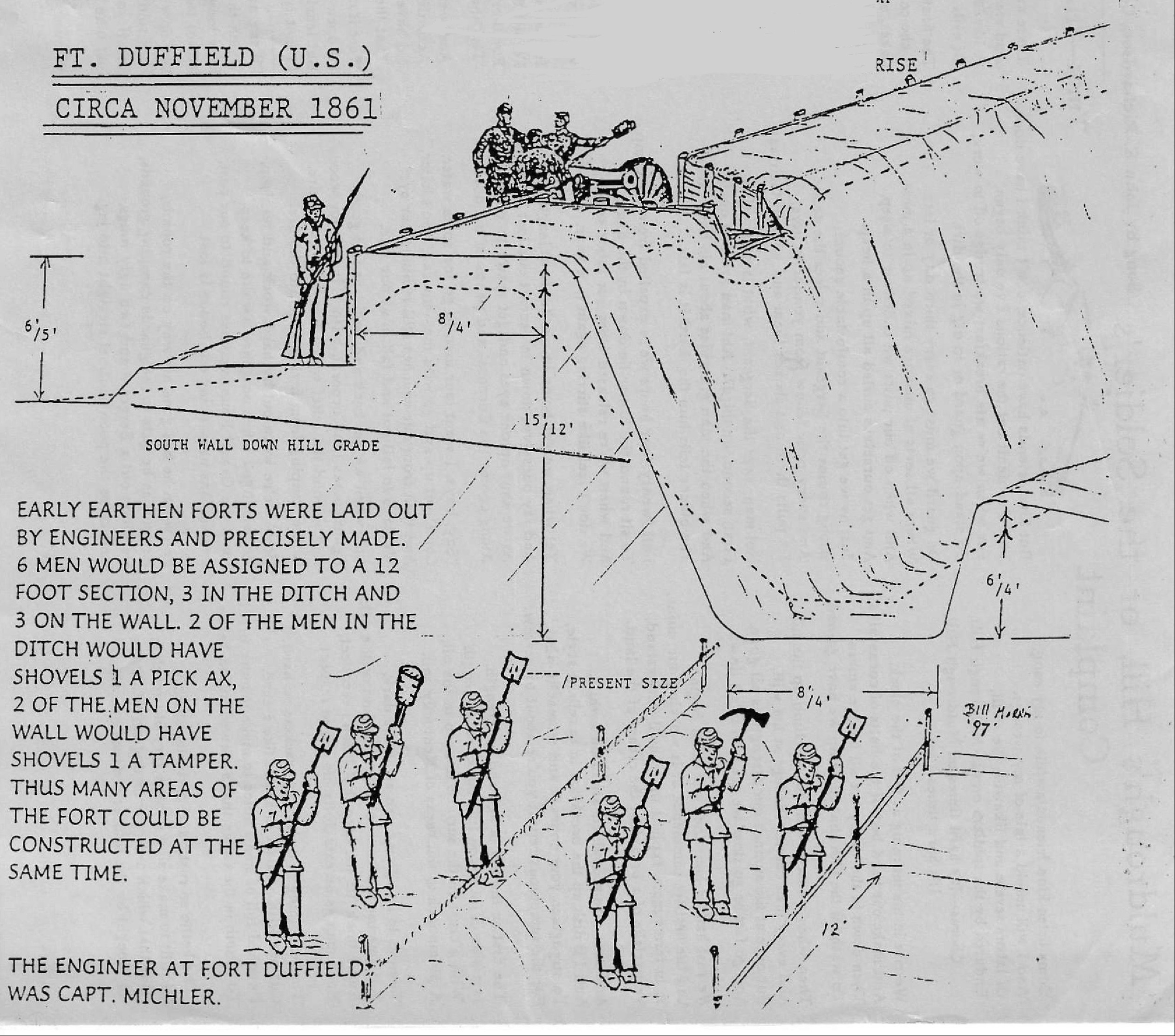
Construction began on November 3, 1861. Soldiers carved a steep, winding path up the ridge, wide enough for two men to walk abreast.
This path became the lifeline for hauling tools, timber, and supplies to the summit.
“The engineers estimated 70,000 days work was expended, the Ninth doing a large part of it, making it quite a strong fortification.”
Companies E and G manned the fort’s artillery positions, while others built cabins inside and outside the fort. By January 1, 1862,
the fortifications and winter quarters were complete.
Fort Layout and Features
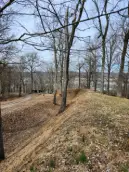
Bennett described the fort as fifteen rods deep and forty rods across in a straight line, but nearly eighty rods when following its
angled walls. A deep ditch surrounded the earthworks, which were designed to mount ten cannons and house up to 1,000 men.
“A corn field occupied the top of the hill… but all around that were large trees which were cut down to give free range to the guns.”
Soldiers also built a scow bridge across the Salt River, cut steps to a spring, and used a long wagon road on the south side to haul
supplies to the summit.
Hardships During Construction

The winter of 1861–62 was brutal. Soldiers worked in freezing temperatures, often without adequate shelter. Illness spread quickly—
pneumonia, dysentery, typhoid, and “camp fever” claimed many lives.
“The climb up Pearman Hill was so steep and exhausting that sick men often collapsed on the trail.”
Despite the hardship, the work continued from dawn to dusk, driven by urgency and necessity.
Completion and Legacy
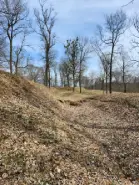
By early 1862, Fort Duffield was largely complete. Though it never saw a major battle, its presence shaped Confederate strategy and
protected Union supply lines during a critical phase of the war. The earthworks remain remarkably intact today, offering visitors a
direct connection to the labor and sacrifice of the men who built the fort.