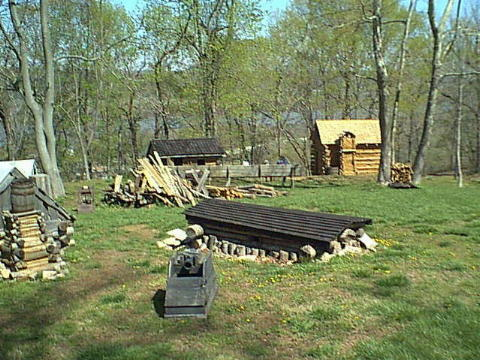
the fort’s working core — a place where soldiers gathered, supplies were organized, and the daily
rhythm of military life unfolded. Though the structures are gone, this open ground once echoed
with footsteps, voices, and the constant movement of men at work.
Note: This photo is many years old, and much has been destroyed by vandals. We are working to
repair and preserve what we can.
Historic View
Walking Tour Map
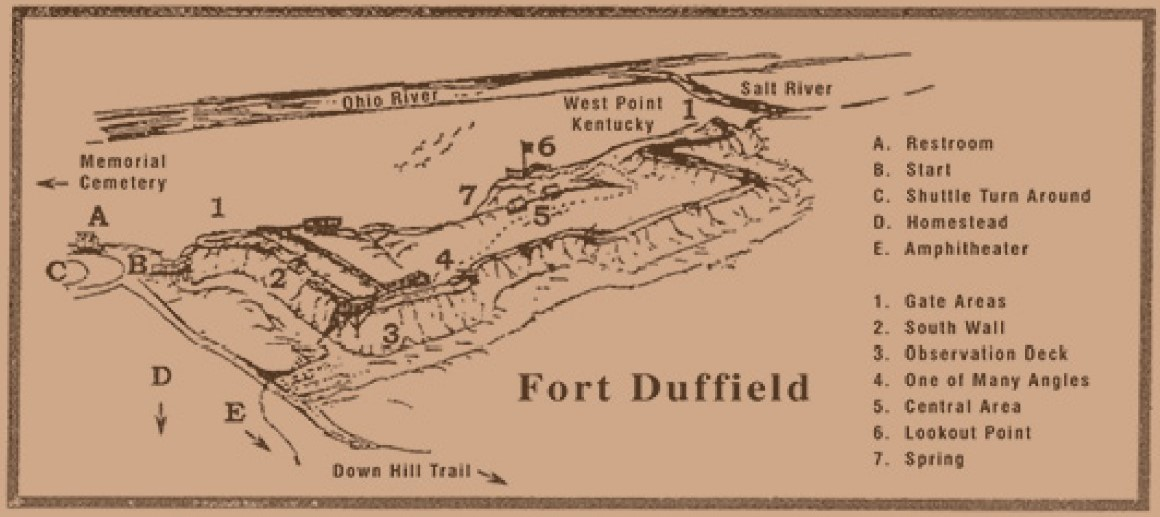
Map Note: Location #2 marks a natural terrace on the west slope below the fort wall.
While this platform may have been used for cooking or work details during parts of the fort’s
occupation, no primary source confirms its use in the winter of 1861–62. Documented evidence
places the cooks’ tent, medical station, and enlisted shelters inside the fort
during the winter encampment.
#5. Central Area
From this point, looking down the berm, it is difficult to picture how the fort appeared when
the 9th Michigan Infantry began construction in late 1861. This open ground was the fort’s
command and working center — a place where officers could see nearly the entire interior and
maintain visual contact with outposts on the surrounding hills.
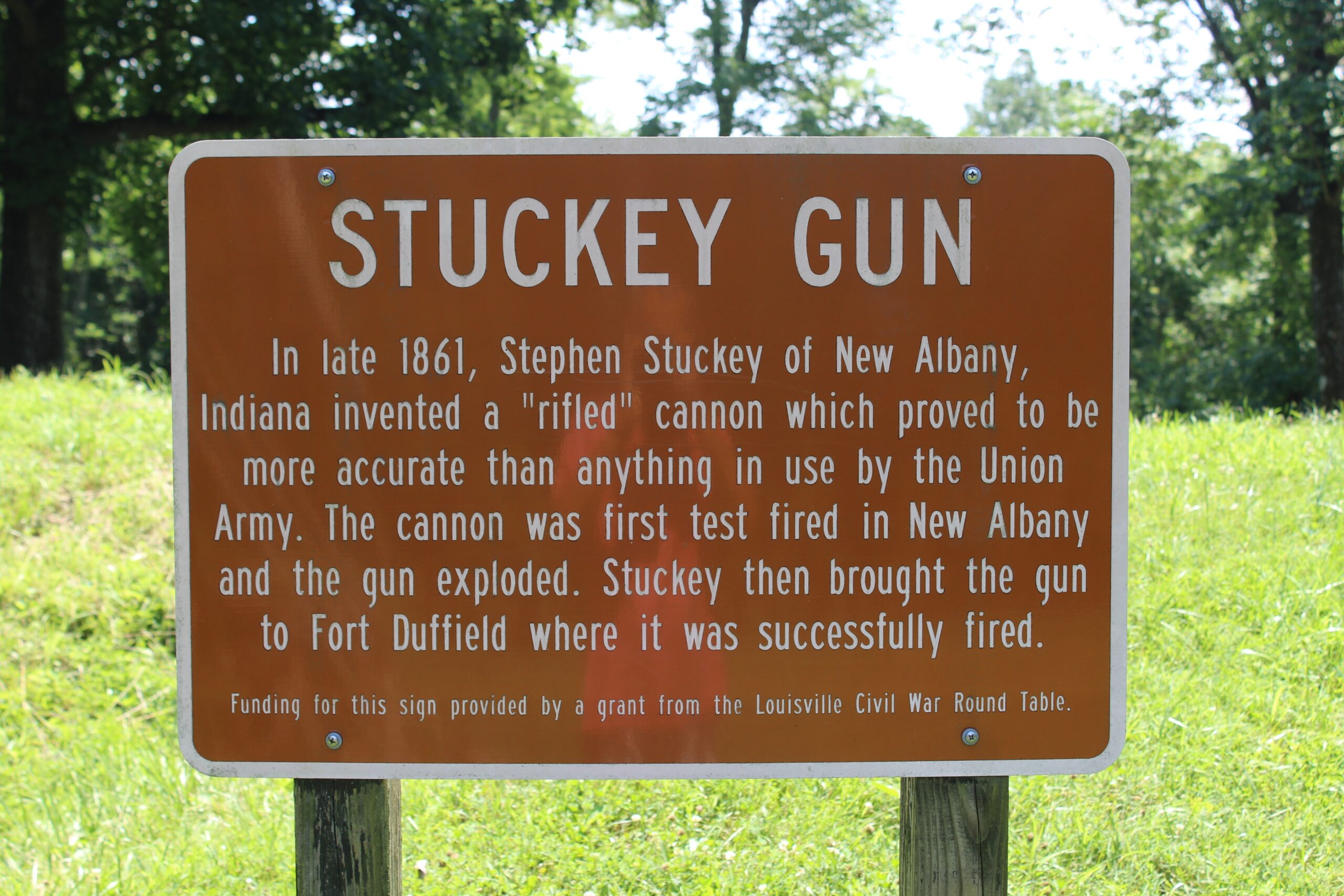
This area may also have been the site where the experimental Stuckey Gun was test‑fired.
After the war, the stone structure visible today was added to fill a cistern installed by the
Rod and Gun Club in the early 1900s.
The Stuckey Gun
Stephen (Steven) Stuckey of New Albany, Indiana, an inventor of local renown and owner of the
American Foundry Co., designed a new rifled cannon at the outbreak of the Civil War. The gun
was judged far more accurate than the smoothbore artillery then in use. During its first test
firing in New Albany, a ring snapped, damaging the cannon.
Wharf master Raynor volunteered to repair the gun and brought it to West Point, where it was
successfully fired at a distance of two miles — likely from or near this central area of the
fort. Stuckey’s work, and later improvements by others, helped establish rifled cannons as the
most accurate artillery pieces of the war.
Stuckey also manufactured the cylinder for the famous steamboat Robert E. Lee at his
New Albany foundry. He later moved to Oxford, Alabama, where he remained active well into his
nineties. At age seventy‑five, he married a woman of thirty‑nine.
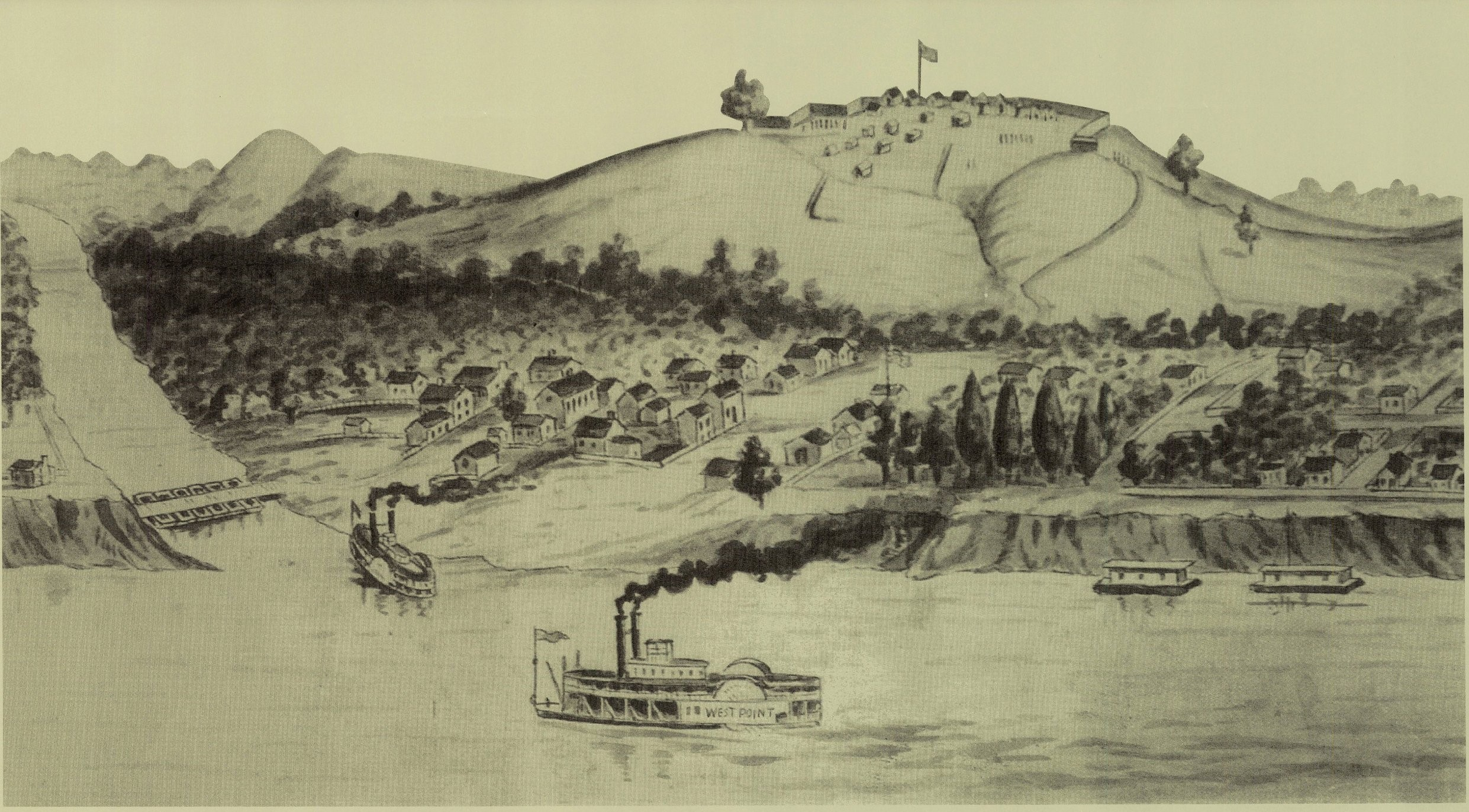
What the Interior Looked Like
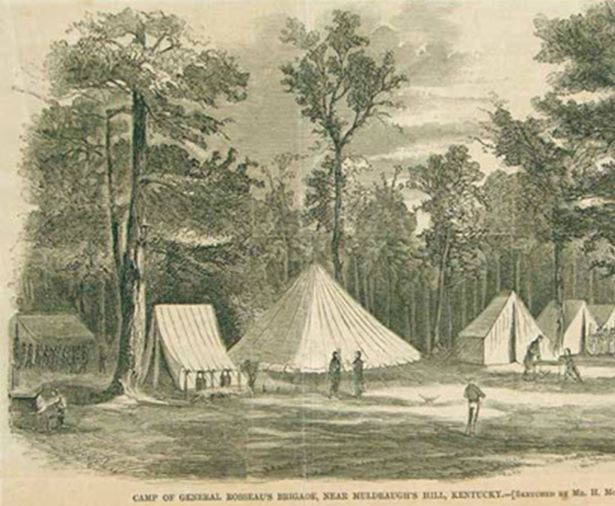
The interior of Fort Duffield would have resembled General Rousseau’s nearby camp on
Muldraugh Hill. Rows of tents, work areas, supply stacks, and designated spaces for cooking,
medical care, and command operations filled the open ground. From this central area, officers
and non‑commissioned officers could oversee the daily life of the garrison.
Interpreting the 1861 Sketch
What the 9th Michigan’s Own Drawing Reveals About Life Inside Fort Duffield
Kelley’s 1861 sketch provides one of the earliest and clearest views of Fort Duffield’s interior.
Although no official military map of the fort has ever been found, this soldier‑drawn diagram
offers a rare, firsthand look at how the men actually lived within the earthworks during the
winter of 1861–1862.
Inside the fort, Kelley depicts nineteen structures arranged tightly along the interior walls.
These include three wedge tents, two Sibley (“bell”) tents, five flat‑roofed tents, and nine
gable‑roofed huts—likely log structures with canvas or plank roofing. Five of the huts are drawn
with darkened roofs, suggesting more substantial construction. These sturdier huts cluster near
the flagpole in the southeast corner.
The sketch also shows that the western half of the enclosure was left open, free of tents or huts.
Another open space appears in the first interior angle on the east side. These two clearings formed
the fort’s limited parade and drill areas—today the location of the Memorial Cemetery. The cramped
layout confirms what soldiers wrote in their letters: Fort Duffield offered little room for
maneuvering, and the men lived in close quarters pressed against the earthworks.
Although informal, Kelley’s drawing is the only known period‑derived illustration of Fort Duffield’s
interior. It remains one of the most important visual sources for understanding how the fort
functioned, how its defenders lived, and why the fort’s design shaped the daily hardships of the
9th Michigan Infantry.
Life Inside the Fort
Cooks’ Tent
Often called the cookhouse tent, mess area, or company kitchen, this was not a permanent
structure. It was usually a fly tent, lean‑to, or open cook shed equipped with:
- fire pits or stone hearths
- kettles, boilers, and mess pans
- a rough table for chopping and preparing rations
- stacked firewood
Documented winter location: Inside the fort, on the west interior side near the
enlisted men’s tents.
Why here?
- Downwind from officers’ quarters and the ammunition bunker
- Close to the west gate for water and firewood runs
- Smoke carried away from the fort’s central working area
- One of the few relatively level interior spaces
Were the cooks inside or outside the fort?
tent, medical station, and enlisted shelters inside the fort’s earthworks.
Chimney bases, cookhouse depressions, and tent pads were still visible when veterans returned
in 1895.
Visitors today will notice a broad terrace on the west slope outside the walls
(marked as #2 on the modern site map). This natural platform is sheltered from ridge‑top winds
and may have been used for cooking or work details during warmer months or later periods of
occupation.
Because no 1861–62 primary source explicitly places the cooks outside the fort, historians
interpret the winter layout as interior‑based while acknowledging the west‑slope terrace as a
plausible seasonal workspace.
Medical Tent
Known as the hospital tent or surgeon’s station, this was typically a large wall tent containing:
- cots or stretchers
- a surgeon’s table
- a medical chest
- water buckets
- bandages, lint, laudanum, and surgical tools
Location: Near the center of the fort, slightly toward the east side, on the
most level interior ground.
Why here?
- Central access from all parts of the fort
- Away from cook smoke
- Away from the latrine on the west slope
- Away from the ammunition bunker on the east slope
- Close enough for quick evacuation of the wounded
How We Know
the winter of 1861–62:
1. Contemporary Descriptions
Veterans returning in 1895 described chimney bases, cookhouse depressions, tent pads, and
interior work areas still visible inside the fort. These accounts place the cooks, medical
tent, and enlisted shelters within the earthworks.
2. U.S. Army Engineering Practice
Civil War field forts typically placed winter tents and cookhouses inside the walls for
protection from wind, rain, and enemy fire. Magazines were positioned on the leeward interior
side, away from open flames.
3. Surviving Terrain
The broad terrace on the west slope (Map #2) is a natural, sheltered platform. While not
documented in winter use, it may have served as a seasonal workspace or cooking area during
warmer months or later occupation.
By combining written sources, engineering manuals, and surviving topography, historians
distinguish between documented winter arrangements and plausible seasonal
activity.
accounts and 1895 newspaper descriptions — identify interior features such as chimneys, tent
pads, and cookhouse excavations inside the fort. The west‑slope terrace visible today is
a surviving topographic feature, not a documented campsite. Its suitability for cooking aligns
with U.S. Army field‑fortification practice, but its use at Fort Duffield remains interpretive
rather than confirmed.
The Ninth Michigan Arrives
The Ninth Michigan Infantry assembled at Fort Wayne, Detroit, in September 1861. Its 913 men
were mustered into U.S. service on October 15. Two days later, three men who refused to be
sworn in were dishonorably drummed out of camp.
On October 23, Reverend Dr. George Duffield — father of Colonel William W. Duffield — presented
the regiment with a silk banner during a patriotic ceremony.
The regiment left Detroit on October 25, traveling by ferry and rail through Michigan City,
Indianapolis, Jackson, Marshall, and Niles. Citizens along the route offered food and
encouragement.
They reached Jeffersonville on October 26, then moved upriver to a tableland above the Ohio
River. There they received their first weapons: Belgian .69‑caliber muskets described as
“killing before and crippling behind.”
General William T. Sherman, then commanding the Army of the Ohio, ordered the regiment to
West Point, Kentucky. They arrived on October 28 and camped in an orchard on the east side of
Salt River. The ground was wet, and without bunks, the camp quickly became fatal — sixty‑one
men died within weeks.
On November 3, Lieutenant Wright and fifty men began grading a winding path up the steep
300‑foot hill. Engineers estimated the fort would require 70,000 man‑days of labor.
Companies E and G were assigned to man the fort’s artillery, which soon increased from two guns
to ten. By December 1, the regiment moved inside the fort and began building log cabins. The
remaining companies built cabins outside the walls.
By January 1, 1862, the fortifications and cabins were complete. The men expected to stay all
winter — but their plans changed only four days later.
On November 21, Colonel Duffield was appointed commander of West Point, then a major supply base
for Union forces moving south. Supplies arrived by steamer and were hauled inland by wagon.
Fort Duffield was built to protect this vital depot and provide a fallback position in case of
attack.
Listen or Explore More
Audio Narration — Central Area
Hear how the Central Area supported daily life and operations within the fort.
Primary Sources & Research
Primary Sources Coming Soon
Archival documents, maps, and engineering notes for this stop are being prepared and will be added soon.
Navigation
Walking Tour Quick Links
© 2026 Fort Duffield • Built with GeneratePress