Burials on the Hill
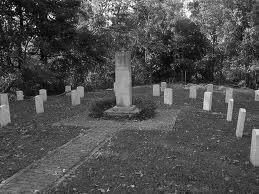
The men who died at Fort Duffield were buried on the high point of the hill overlooking the fort.
Their graves formed the earliest military cemetery in the region, tended by their comrades until
the post was abandoned in 1862.
Contemporary accounts state that sixty‑one soldiers were buried on the hill during the
fort’s brief but intense period of occupation. Disease, exposure, and the exhausting labor of
construction claimed far more lives than combat. The burial ground became a solemn point of
remembrance for the men stationed here, and later for the community that preserved the site.
Dimensions of the Burial Trench
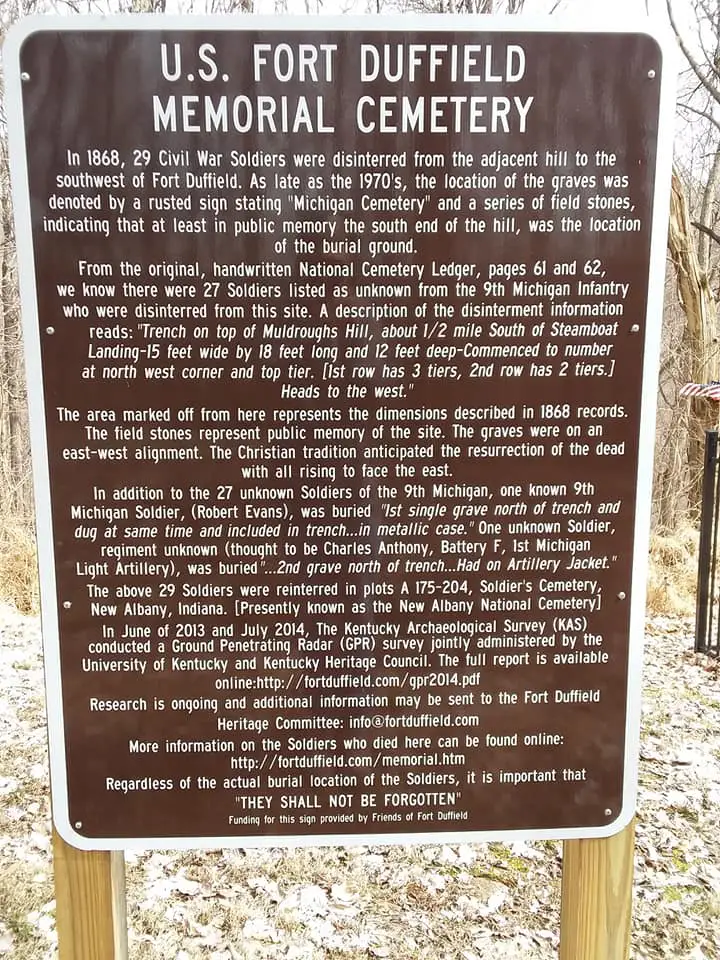
According to the 1868 National Cemetery Ledger, the original burial trench on Memorial Hill measured
15 feet wide, 18 feet long, and 12 feet deep. It lay on the top of Muldraugh’s Hill,
about half a mile south of the steamboat landing. The trench held multiple tiers of burials:
the first row contained three tiers, and the second row contained two. The soldiers were laid
with their heads to the west, following Christian burial tradition.
The sign also records that 27 unknown soldiers of the 9th Michigan Infantry were
disinterred from this trench in 1868, along with two additional identified burials nearby.
These remains were later reinterred at New Albany National Cemetery.
1. First Reports of Deaths
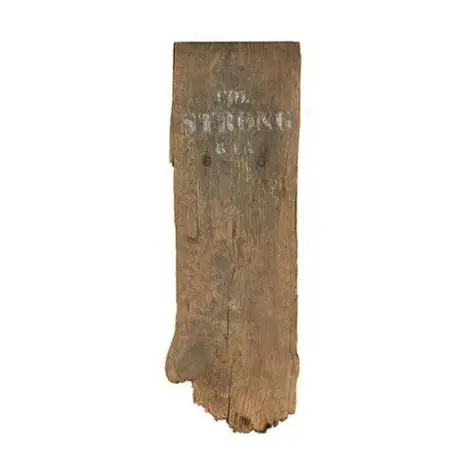
Early accounts describe the first men who died at West Point and were buried on the hill.
Excerpt
The earliest reports note that sickness struck quickly, and the first burials occurred within
weeks of the regiment’s arrival. Exposure, fatigue, and inadequate shelter contributed to the
first losses.
2. Sick List & Mortality Notes
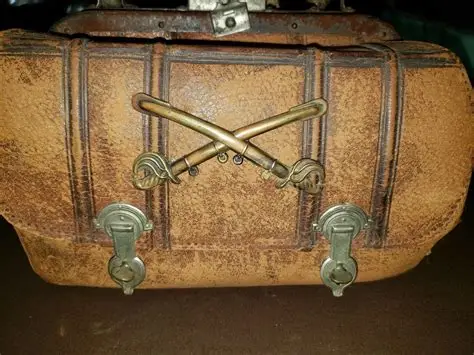
Notes and reports tracked the rapid spread of disease and the growing number of sick.
Excerpt
Daily tallies show the sick list rising sharply as pneumonia, measles, and typhoid swept
through the regiment. Officers struggled to keep men on duty as the hospital overflowed.
3. Burial Details & Grave Locations
Letters describe how and where the men were buried on the hill above West Point.
Excerpt
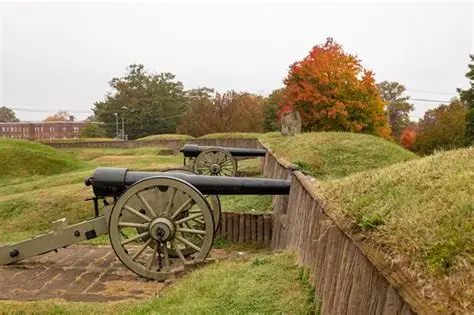
Contemporary descriptions note that the graves were arranged in rows on the ridge, marked
with simple wooden boards. The burial ground overlooked the river and the town below.
4. Departure Orders
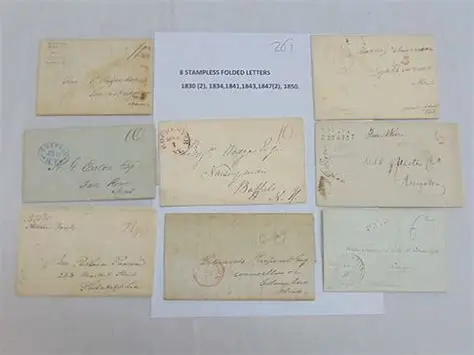
Orders issued in early 1862 prepared the regiment to leave Fort Duffield.
Excerpt
As new units arrived to relieve them, the Ninth Michigan received instructions to prepare
for movement south. These orders marked the end of their time on Muldraugh’s Hill.
5. Later Mentions of Burials
Later correspondence referenced the burial ground and the men interred there.
Excerpt
Later letters mention the cemetery as a landmark on the hill, noting the number of graves
and the condition of the burial site as the regiment prepared to leave.
6. Sick‑List & Hospital Condition Letters (December 1861)
Two December 1861 letters describing sickness, hospital conditions, and camp hardships.
Letter A — Early December 1861
Headquarters, West Point, Kentucky — December 1861
Col. William W. Duffield, 9th Michigan Infantry
General,
Agreeably to your request, I submit the following statement of our whereabouts and condition.
The weather has been bad, and the men have been much exposed. This has been aggravated by the
severe labor we have been compelled to perform in building roads and constructing a field work
upon the high, sloping hill.
Our hospital contains over three hundred men, and I have taken possession of three houses in
the village for hospital use. The patients must be under our own hands, and I fear the men will
have to go through with it before it improves. We are completely used up so far as duty is
concerned by the sickness and the details necessary for fatigue and guarding stores and picket.
Statement of Duty and Sick List:
Sick in hospital — 300
Fatigue duty building fort — 100
Guard — 45
Police (old guard) — 75
Wagon/pack train — 65
Guarding stores and ferry — 20
Two companies on line to change off — 90
Scouts — 12
Orderlies — 5
Cooks, attendants, etc. — 11
Total on duty — 832
Total present and absent — 943
If you can spare one hundred men, by all means let me have them. If not, I must request you to
send an officer to hear the matter and arrange it with convenient speed. If your power cannot
serve, by all means send another, as the absolute necessity requires it.
Tomorrow the Indiana and Ohio regiments start for Camp Nevin. Then we will be left here alone
in our garrison, and our details will of course be heavier.
I am somewhat discouraged at the turn affairs have taken, but trust that it is always darkest
before the day, and that we are at the turning point and will hereafter continue to improve.
If we are indebted to the 8th Michigan for our measles, I am very much obliged to them.
I will endeavor to keep you advised of our condition. Fortunately our officers continue well,
with the exception of Capt. R——, who has returned on two months’ sick leave, and Lieut. Hornbeck,
laid up with intermittent fever.
Yours in great haste,
Wm. W. Duffield
Colonel, 9th Michigan Infantry
Letter B — Late December 1861
Headquarters, First Brigade, Muldraugh’s Hill — December 1861
Col. William W. Duffield
General,
I am in receipt of your favor relative to Capt. S—— and Surgeon E. Church. Dr. Church has
reported for service and is now at the hospital at West Point.
Our sickness is on the decline. Our sick report of today shows only two hundred and fortysix
(246) instead of three hundred and thirtytwo (332) of last week. The character of the sickness
is also changing, the typhoid symptoms being evidently on the decline.
Sergeant Farmer of Company E, whom you report as arrested, claims not to have been mustered
into the United States service. Captain M—— claims that he was, although all the other sergeants
say he has not. At all events, his name is not borne upon the muster roll for payment made by
Captain M—— dated November 30th, 1861. Whether he is borne on the original muster roll I cannot
state, as I have never received those rolls from Captain Henry L——, although he states they were
forwarded to headquarters.
Captain M——’s company is in a terrible state. There has been a personal quarrel between the
captain and Lieutenant Shaw, which has at last culminated in charges preferred by both. I have
forwarded these charges to Department Headquarters and recommended that, as both officers were
inefficient, a commission be appointed to examine them with a view to their discharge.
The company is thoroughly demoralized by this personal quarrel and can only be brought again
into good discipline by the loss of both these officers.
I am busily occupied getting the men into comfortable log cabins and trust they will all be
housed by the close of this week.
Through the blunder of Company E’s muster roll, I have been thrown back so as to draw pay from
the 20th of September instead of the 10th, and the entire staff with it.
Nearly all the officers are minus pay in consequence of the new order which will not allow
company officers to draw pay until they have mustered the minimum number of sixtyfour privates.
The colonel and staff cannot draw pay until the companies are all filled up to minimum number,
notwithstanding General Orders No. 2 of 1861.
I am formally assigned to the command of this post and the field work with eleven pieces on
the hill. This gives me the duties of a brigadier, though the pay of a colonel. This post is the
magazine of supplies and military stores for all the troops in our front, and in addition to the
care of my own regiment keeps me constantly employed. This must be my apology for not writing
you sooner.
I am much aided by Lieutenant Colonel Parkhurst, who is a most faithful and valuable officer.
He is working very hard, and as he is a person of known and tried courage, I have every reason
to believe that he will soon become as valuable an officer as the state has in her service.
The weather is severe for this locality. The thermometer last night was five degrees below
zero, and we have six inches of snow upon the ground. I am glad to see this, as I think it will
have a tendency to stop the prevalence of typhoid, which has decimated our ranks.
Our mortality has been hitherto severe and has fallen heavily upon the commissioned officers.
I think that by New Year’s Day we will be again hale and hearty. With few exceptions our officers
continue well, and Assistant Surgeon White has been both constant in his labor and skillful in
his treatment of disease. His untiring efforts entitle him to great praise.
I remain, General,
Your obedient servant,
Wm. W. Duffield
Colonel, 9th Regiment Michigan Infantry
Commanding Brigade