effort. As the United States mobilized for World War I, the Army established Camp Knox as an
artillery training center. The camp’s earliest footprint was not in today’s Fort Knox, but
directly in and around West Point.
A New Military Presence Arrives
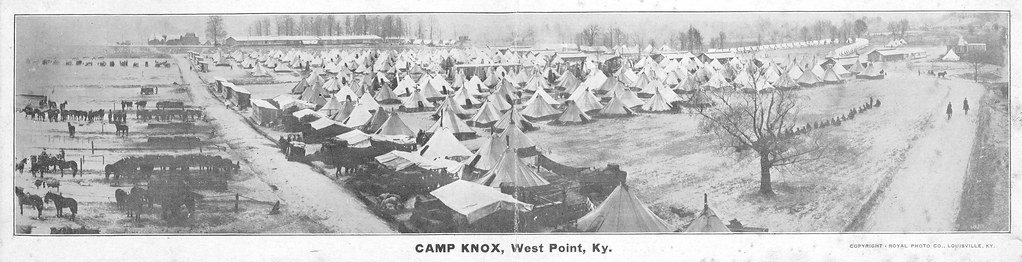
When Camp Knox was established in 1918, the fields surrounding West Point were transformed
almost overnight. Canvas tents stretched across the flats, horse teams and wagons moved
constantly, and the Army’s earliest motorized vehicles rumbled through the town’s streets.
Thousands of soldiers trained here during World War I. They marched through West Point,
drilled along the river bottoms, and used the surrounding hills for observation and
artillery practice. The town’s daily rhythm shifted as military life became part of the
community’s soundscape.
Training on the West Point Flats
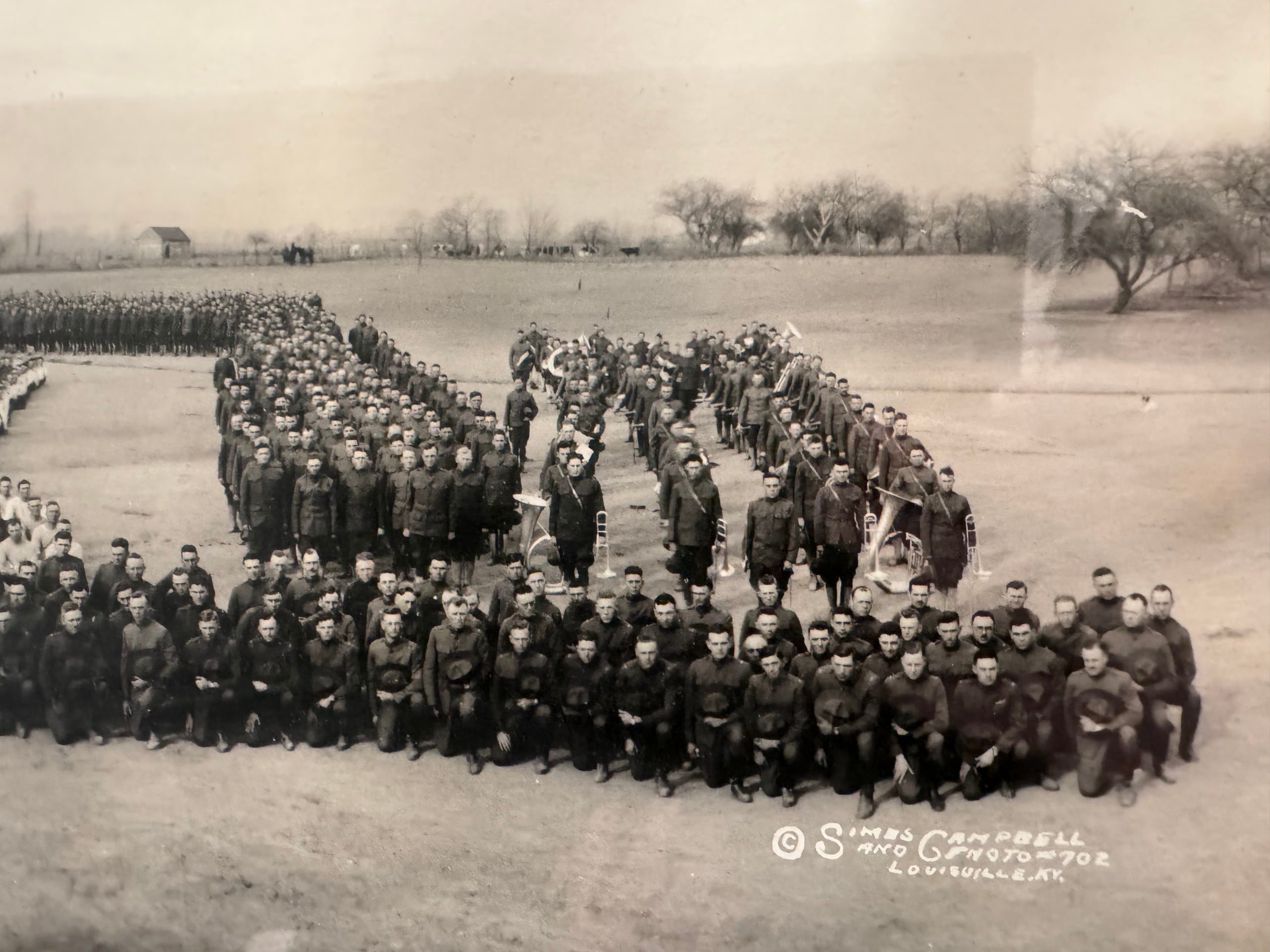
One of the most striking images from the early Camp Knox era shows artillery trainees
forming enormous letters and unit symbols on the West Point flats. Photographed from the
surrounding hills, these formations served as documentation, morale boosters, and
recruitment imagery.
Symbols on the Landscape
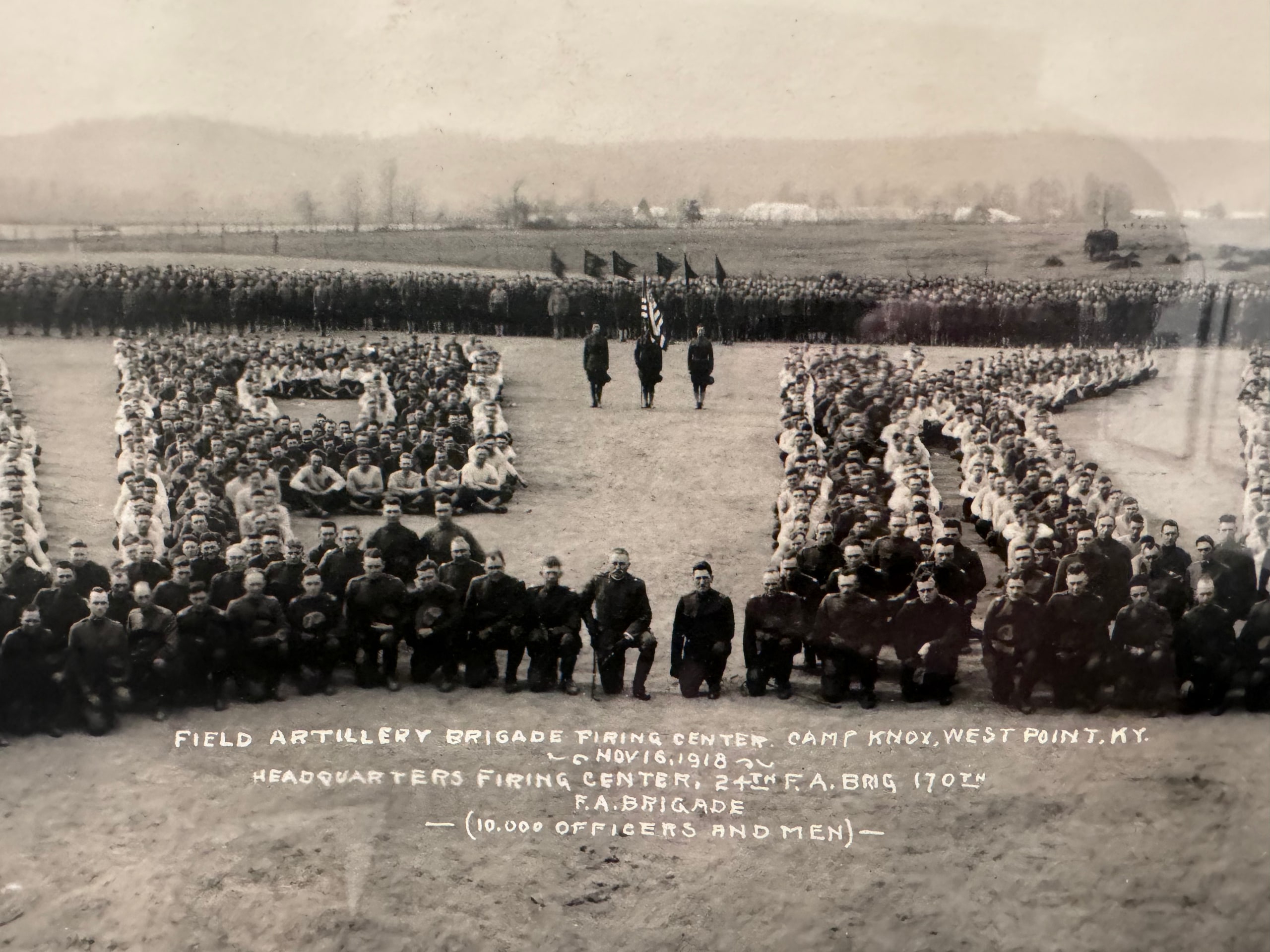
A second formation photograph reveals the scale of Camp Knox’s early operations. Soldiers
arranged themselves into symbols representing their artillery units, creating images that
remain some of the most iconic visual records of the camp’s West Point era.
From Camp Knox to Fort Knox
the region. What began as a temporary World War I training center soon evolved into a
permanent installation — Fort Knox.
Soldiers and civilian workers passed through West Point daily, bringing new business to
stores, boarding houses, and restaurants. During the Great Depression and World War II,
Fort Knox became one of the nation’s most important military posts. The arrival of the
U.S. Bullion Depository in 1936 drew national attention and cemented the region’s
strategic importance.
Camp Knox was the spark — Fort Knox became the legacy.
© 2026 Fort Duffield • History Section