When the U.S. Army expanded Camp Knox during World War I, Stithton was absorbed into the
growing military reservation. Homes, farms, churches, and businesses were purchased by the
government, and the landscape was transformed into what would become the heart of Fort Knox.
The Community of Stithton
Stithton was a rural community with deep roots in Hardin County. Families farmed the land,
attended local churches, and traded in nearby West Point and Elizabethtown. Life moved at a
steady pace — until 1918, when the U.S. Army arrived to establish Camp Knox.
The Army’s need for land grew quickly. What began as a temporary World War I training center
soon required permanent facilities, barracks, headquarters, and artillery ranges. Stithton
lay directly in the path of this expansion.
Absorbed Into Camp Knox
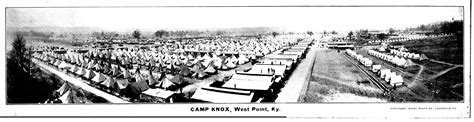
As Camp Knox expanded, the Army purchased the land that made up Stithton. Families relocated,
farms were cleared, and the community’s buildings were repurposed or removed. The area became
the core of the new military post — including its headquarters, training grounds, and early
infrastructure.
Though the community disappeared from the map, its legacy lives on in the foundations of
Fort Knox and in the stories of the families who once called Stithton home.
From Stithton to Fort Knox
region. What began as a wartime necessity became a permanent installation that shaped the
economy, identity, and daily life of surrounding communities — including West Point.
Over the decades, Fort Knox grew into one of the most important military posts in the nation.
The land that once held Stithton became home to training centers, barracks, headquarters, and
the infrastructure that supported generations of soldiers.
© 2026 Fort Duffield • History Section