Explore Fort Duffield
Follow the fort’s early development, learn about the people connected to it, or explore the
research and primary sources that reveal its story.
Origins & Early History
How Fort Duffield was built and why it mattered in 1861–62.
Construction of the Fort
The labor, engineering, and hardship behind building the fort.
Timeline 1861–1862
A chronological look at troop movements and command decisions.
Garrison Life
Daily routines, hardships, slang, and soldier culture.
Strategic Tension
How a fort that never fired a shot still shaped the war.
vital Union supply lines. The threat of attack was constant, even if the attack never came.
Why the Fort Mattered
Guarding the Rivers and Roads
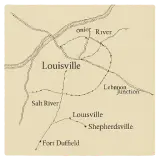
From its high position above West Point, the fort overlooked the Salt and Ohio Rivers and the roads
leading south. Any Confederate movement toward Louisville would have been visible from the ridge,
giving Union forces a critical early‑warning advantage.
Confederate Activity in the Region
Confederate cavalry and scouts operated throughout central Kentucky. Rumors of raids, sightings, and
troop movements circulated constantly, keeping Union soldiers on edge.
Though no direct assault ever materialized, the fort’s guns, elevation, and visibility discouraged
enemy forces from approaching West Point. Its very presence altered Confederate calculations.
Psychological Warfare
The fear of attack shaped daily life at the fort. Soldiers slept lightly, kept weapons close, and
maintained constant watch along the walls. Even without a battle, the tension was real.
In many ways, the fort served as a silent guardian — a deterrent that protected the rivers below
and the vital supply routes feeding the Union Army’s advance into the South.
Next: How Fort Duffield Got Its Name →
← Back to Origins & Early History
© 2026 Fort Duffield • Origins and Early History