FORT DUFFIELD & WEST POINT, KENTUCKY
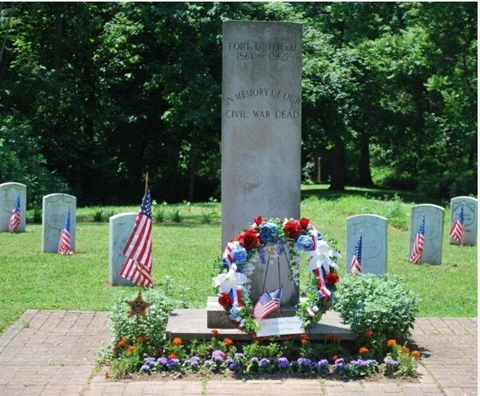
1861–1862
A unified historical and interpretive record of the soldiers who lived, labored, suffered,
and died at Fort Duffield and West Point during the first winter of the Civil War.
This archive restores their stories, corrects long‑standing errors, and preserves the memory
of every known soldier — named and unnamed — connected to this place.
- Title Page
- Introduction
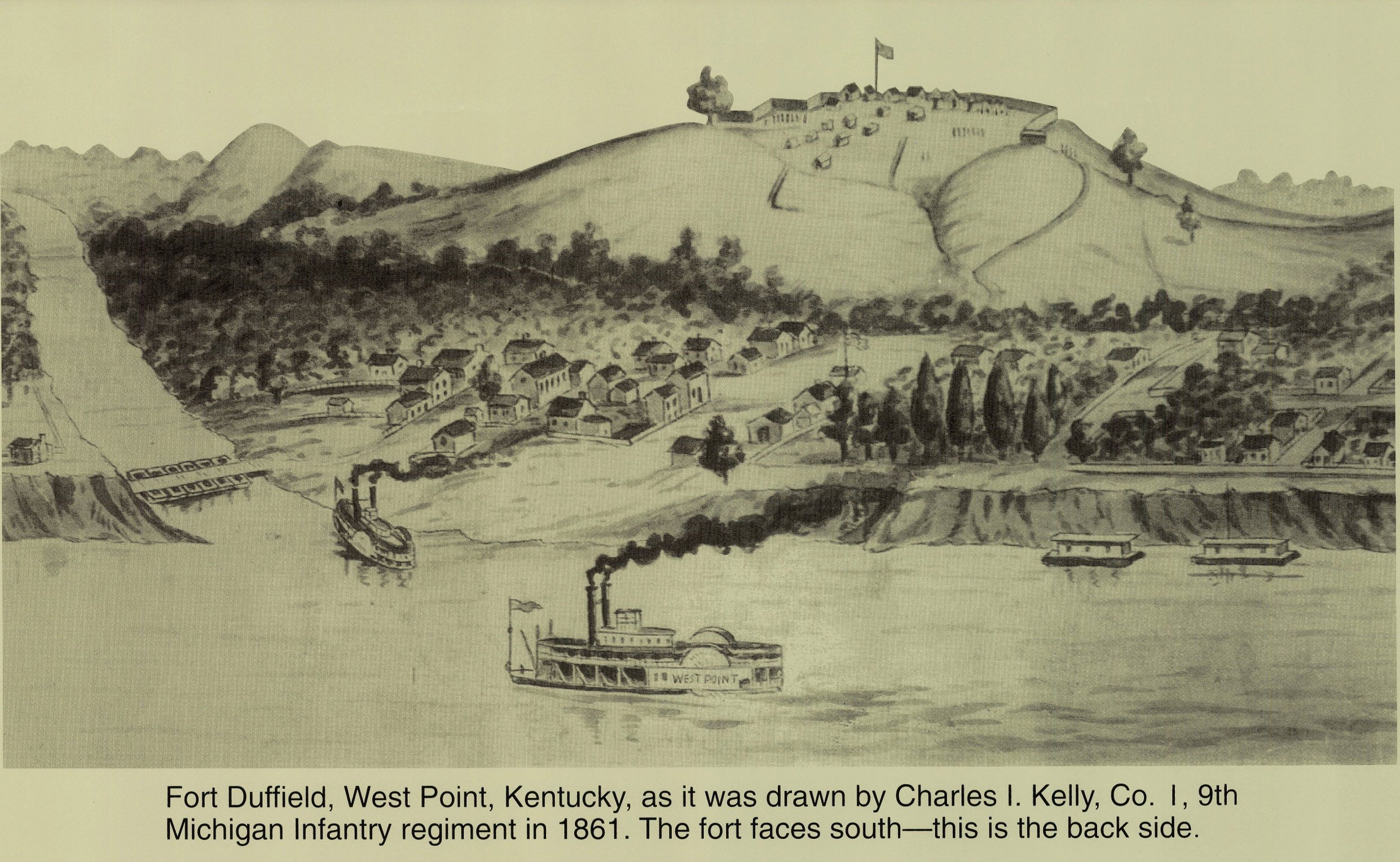
- Historical Overview of Fort Duffield
- Why Earlier Records Listed “48 Soldiers”
- Fort Construction, Camp Conditions & Disease
- West Point, Kentucky During the Civil War
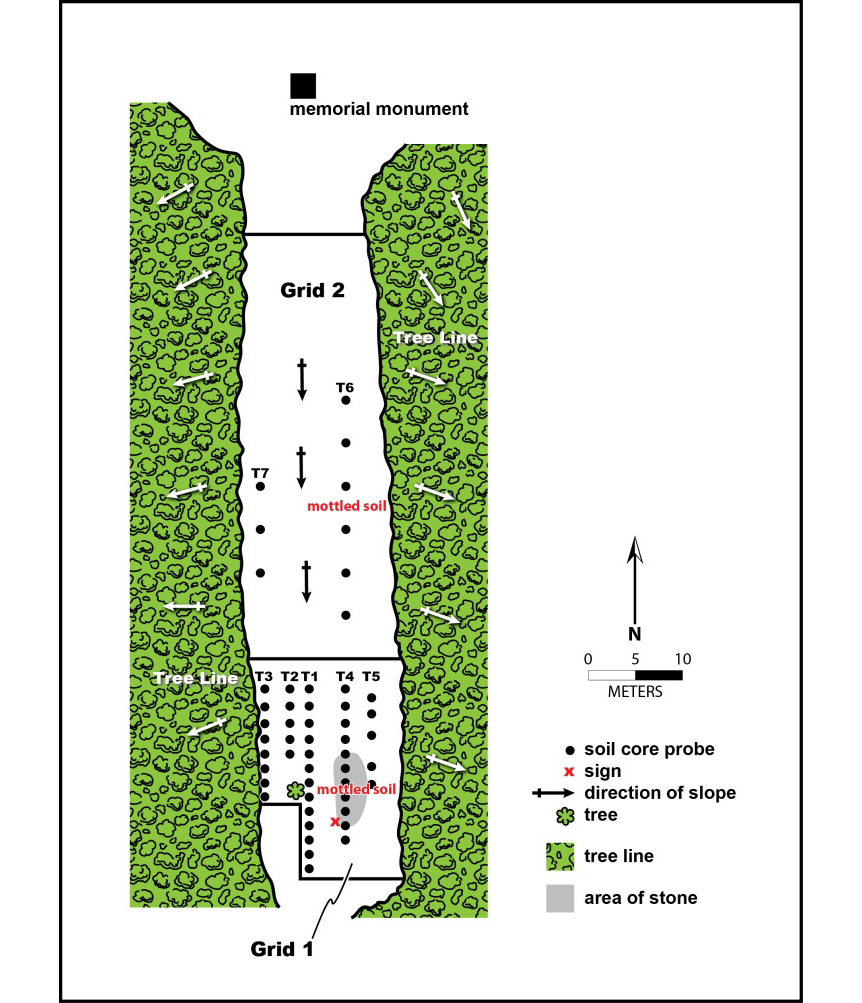
- Michigan Cemetery (Original Burial Site)
- Reinterment to New Albany National Cemetery
- Unknown Soldiers
- Non‑Michigan Soldiers Who Died at Fort Duffield
- Complete Death & Burial Register
- Appendix A — Timeline of Events (1861–1862)
- Appendix B — Fort Duffield Earthworks & Layout
- Appendix C — Medical Conditions & Typhoid Epidemic
- Appendix D — Burial & Reinterment Ledger Notes
- Biographies (A–Z)
Introduction
In the winter of 1861, hundreds of young Union soldiers climbed the steep slopes above West Point,
Kentucky, carrying axes, shovels, rifles, and the weight of a nation at war. They came to build a
fort — a stronghold meant to guard the vital Louisville–Nashville Turnpike and the busy
Ohio River landing below. What they could not know was that the greatest enemy they would face
that winter was not Confederate fire, but the cold, the rain, the mud, and the diseases that swept
through their camps.
Fort Duffield was carved from the ridge in November and December 1861 by the
9th Michigan Infantry, assisted by the 1st Wisconsin Infantry and the
37th Indiana Infantry. The work was brutal. The hill was steep. The weather was unforgiving.
And the men — many far from home for the first time — were unprepared for the hardships that lay ahead.
Within weeks, sickness spread through the regiments. Typhoid fever, pneumonia, measles, and camp
illnesses struck with devastating speed. Letters home spoke of “men dying daily,” of “long lines
of stretchers,” and of the exhaustion that came from building a fort while fighting for one’s life.
This archive preserves the full story of that winter — the fort they built, the hardships they
endured, the men who died, and the long journey of their remains from the hillside cemetery to
the national cemetery at New Albany. It also corrects long‑standing errors, including the myth of
“John Light,” a name once attached to an unidentified artillery burial.
What follows is the most complete and accurate record ever assembled of the soldiers connected to
Fort Duffield. It is both a historical document and a memorial — a way to ensure that the men who
died here are remembered not as numbers in a ledger, but as individuals whose lives were cut short
in service to their country.
Historical Overview of Fort Duffield
In the autumn of 1861, the Union Army looked southward with urgency. Kentucky’s loyalty was fragile,
the Confederacy pressed north, and the Louisville–Nashville Turnpike — the main artery into the
heart of the South — had to be protected at all costs. West Point, a river town at the foot of
Muldraugh’s Hill, became the hinge on which this strategy turned.
When the 9th Michigan Infantry arrived in late October, they found a landscape both beautiful
and unforgiving. The steep ridge above the town offered a commanding view of the Ohio River and the
turnpike, but it demanded backbreaking labor to transform into a defensible position. Under the
direction of Col. William W. Duffield, the regiment — assisted by the 1st Wisconsin and
37th Indiana — began carving a fort from the hillside.
Trees fell. Earth moved. The ridge echoed with the sound of axes, shovels, and the shouted cadence
of men learning to work as soldiers. The fort took shape quickly — an irregular earthwork following
the natural spine of the hill, its angles designed to sweep the approaches with overlapping fire.
Though Fort Duffield never saw battle, its presence mattered. It secured the turnpike, protected
the river landing, and reassured Union commanders that the gateway to central Kentucky would not
fall easily. But the price paid by the men who built it was steep. The winter of 1861–62 would
become one of the deadliest seasons in the regiment’s history.
Why Earlier Records Listed “48 Soldiers”
For decades, Fort Duffield’s story was summarized in a single number: 48 soldiers died here.
This figure appeared on signage, in brochures, and in early histories. But like many Civil War
numbers, it told only part of the story.
The number “48” came from the 1869 reinterment records, when the U.S. Army removed remains from
the wartime Michigan Cemetery and transferred them to New Albany National Cemetery. The ledger
documented:
- 29 identified soldiers reinterred in Section A
- 2 unknown soldiers placed in Lot 2, Graves 2 and 3
- 1 Michigan soldier (Robert Lucas) reinterred separately in Lot 2, Grave 4
These 32 burials represented only the remains recovered from the hillside cemetery — not the full
toll of the winter. Several categories of deaths were not included in the 1869 count:
- Men who died in West Point hospitals
- Men who were sent home on furlough and died shortly after
- Men whose families retrieved the bodies
- Men from other regiments serving in the West Point–Muldraugh’s Hill corridor
- One unidentified artillery soldier buried near the trench
The “John Light” Myth
Early Fort Duffield signage identified the artillery burial as “John Light.” Modern research
shows this name was a misunderstanding. The earliest notes describe an
“unknown soldier buried in an artillery jacket.” Over time, “artillery jacket” was misread as
a name, eventually becoming “John Light.”
The historically accurate entry is:
- Name: Unknown Artillery Soldier
- Unit: U.S. Artillery (temporary Regular Army detachment)
- Date: Winter 1861–62
- Burial: South of the trench at Fort Duffield
- Reinterment: Not moved in 1869
The name “John Light” is preserved only as a historical footnote — a reminder of how easily memory
can shift when records fade.
When all categories are included, the true number of soldiers who died as a result of service at
Fort Duffield is higher than 48. This archive reflects the corrected, research‑based total.
Fort Construction, Camp Conditions & Disease
Life at Fort Duffield was a battle against the elements. The men arrived in late autumn, pitched
tents on cold ground, and immediately began hauling logs, digging earth, and climbing the steep
ridge day after day. Their bodies were pushed to the limit long before disease struck.
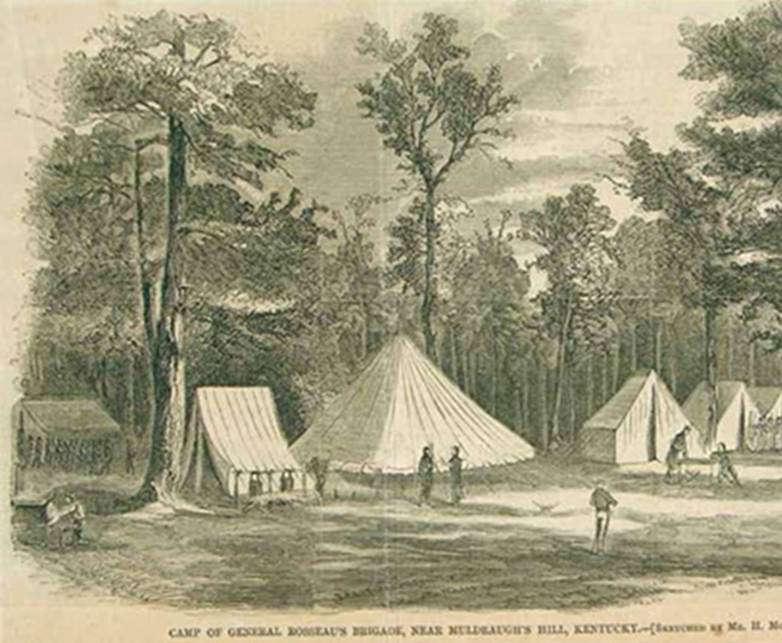
The winter of 1861–62 was wet, raw, and unforgiving. Rain turned the slopes to mud. Frost coated
the tents. Water had to be carried up the hill. Firewood was scarce. And the men — many from
Michigan and Wisconsin — found themselves exposed to a climate far harsher than they expected.
Primary causes of death included:
- Typhoid fever
- Pneumonia
- Measles
- Dysentery
- Exposure and exhaustion
Letters from the 9th Michigan speak of “men dying daily,” of long lines at the surgeon’s tent, and
of the heartbreak of watching friends weaken beyond help. The fort they built would stand for
generations — but many of the men who built it would not live to see spring.
West Point, Kentucky During the Civil War
In 1861, West Point was a small river town with a big role. Steamboats churned the Ohio River,
wagons rattled along the Louisville–Nashville Turnpike, and soldiers from across the Midwest
passed through its muddy streets. The town became a crossroads of war — a place where regiments
paused, supplies were unloaded, and the sick were carried into makeshift hospitals.
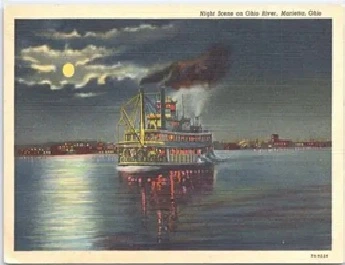
The presence of the Union Army transformed West Point. Warehouses became depots. Homes became
hospitals. Churches sheltered the sick. The river landing bustled with activity as men, horses,
and supplies moved south toward Elizabethtown and beyond.
Many of the soldiers who died at Fort Duffield took their final breaths not on the hillside, but
in West Point itself — in hospital wards lit by lanterns, tended by surgeons who fought a losing
battle against typhoid, pneumonia, and dysentery. Their graves were scattered across the town’s
early cemeteries, some later moved, others lost to time.
West Point was more than a supply depot. It was a place of hope, hardship, and heartbreak — a
community that bore witness to the cost of war long before the first major battles were fought.
<
Michigan Cemetery (Original Burial Site)
The first cemetery at Fort Duffield was not a formal burial ground. It was a necessity — a place
chosen because the dead could not wait. Located on the southwest slope of the ridge, the
Michigan Cemetery became the resting place for dozens of young soldiers who never made it
home.
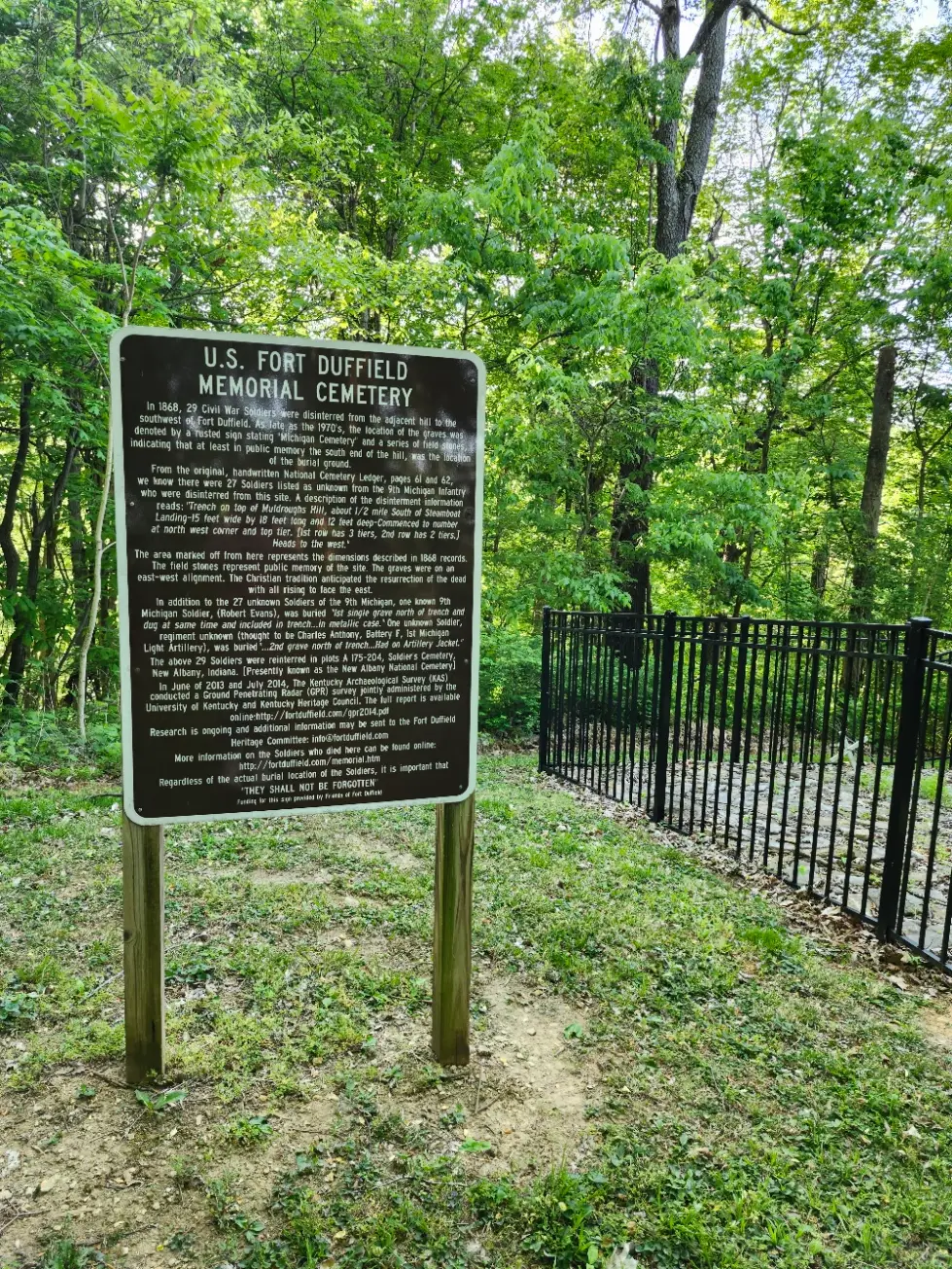
The graves were marked with simple wooden boards or fieldstones. Winter storms, spring rains, and
the passing of years erased many of these markers. By the time Federal reinterment teams arrived
in 1869, only a portion of the burials could be identified.
Yet the hillside still holds its silence. Visitors today walk among the depressions in the earth,
knowing that beneath their feet lie the traces of the fort’s earliest dead — men who came to
Kentucky full of purpose and never returned to Michigan’s forests and farms.
Reinterment to New Albany National Cemetery (1869)
After the Civil War, the U.S. government undertook a massive effort to gather the scattered dead
from small wartime cemeteries and reinter them in newly established national cemeteries. In 1869,
a Federal burial detail climbed the slopes of Fort Duffield to recover the remains of the men
buried there eight years earlier.
Their work was difficult. Many wooden markers had rotted away. Some graves had collapsed. Others
were disturbed by erosion. Still, the team recorded and removed every identifiable set of remains.
- 29 identified soldiers were reinterred in Section A
- 2 unknown soldiers were placed in Lot 2, Graves 2 and 3
- 1 Michigan soldier, Robert Lucas, was placed in Lot 2, Grave 4
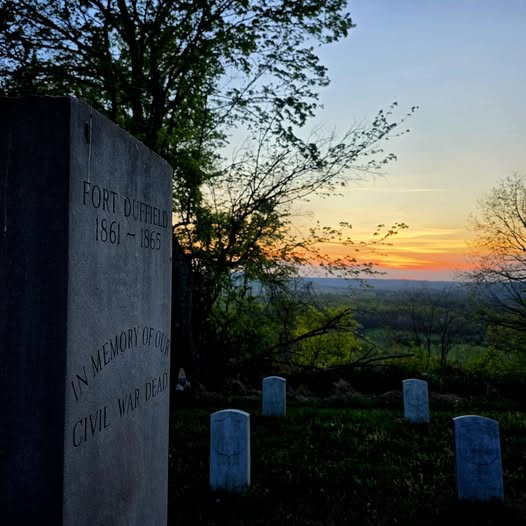
These 32 burials formed the basis of the long‑standing “48 soldiers” narrative. But the ledger
tells only part of the story. Several soldiers died in West Point hospitals and were buried in
town cemeteries. Others were sent home on furlough and died shortly after arrival. A few were
retrieved by their families. And one — the Unknown Artillery Soldier — remained on the hill,
never moved.
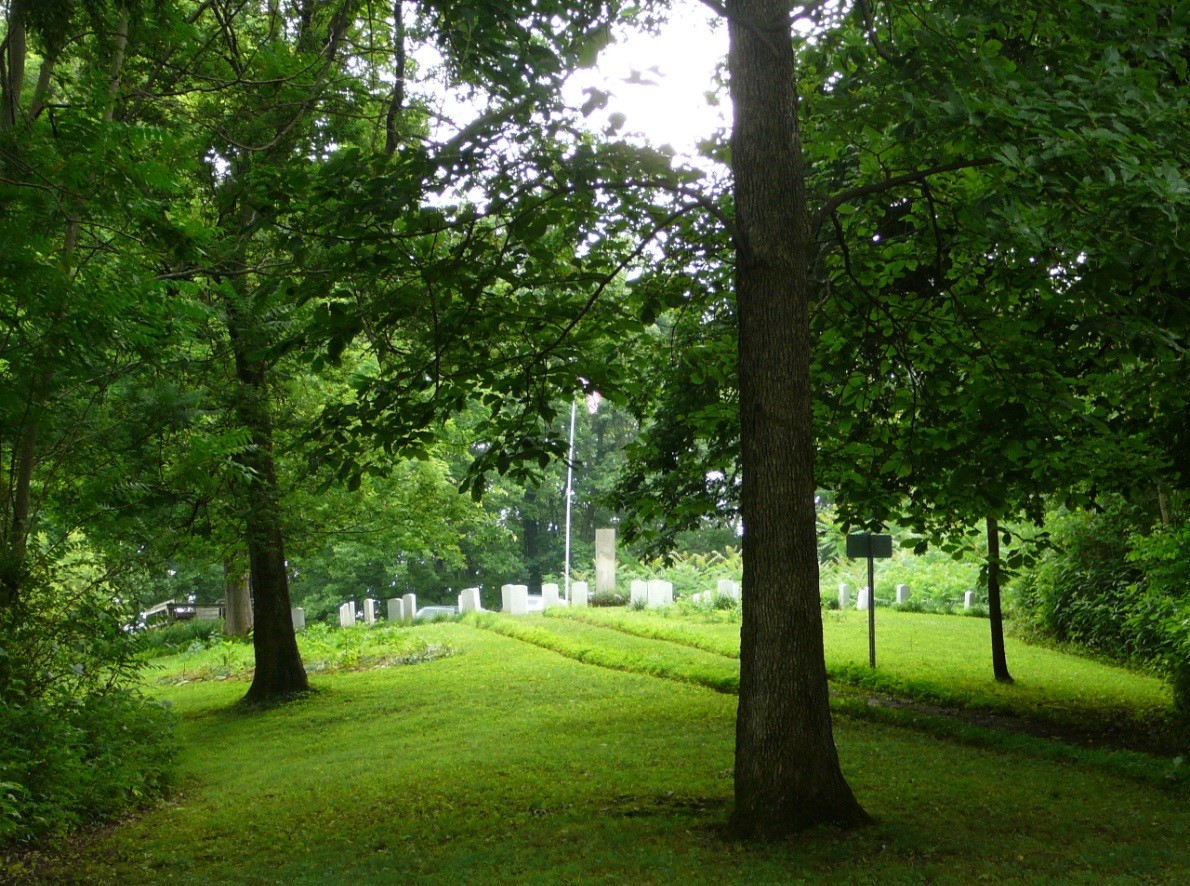
Today, the graves at New Albany stand in neat rows, each marked with a white stone. But their story begins on a cold Kentucky hillside, where the men of the 9th Michigan and their comrades
faced a winter that proved deadlier than any battle.
Unknown Soldiers
Not every soldier who died at Fort Duffield could be identified. Time, weather, and the chaos of
war erased names that families waited to hear. The 1869 reinterment ledger lists two unknown
soldiers, and the hillside itself holds at least one more whose identity has been lost.
The three principal unknowns are:
- Unknown Soldier — Lot 2, Grave 2 (reinterred 1869)
- Unknown Soldier — Lot 2, Grave 3 (reinterred 1869)
- Unknown Artillery Soldier — buried south of the trench, not reinterred
The Unknown Artillery Soldier
(later misidentified as “John Light”)
Early Fort Duffield signage referred to this burial as “John Light.” Modern research shows
that no such soldier appears in any wartime roster, burial ledger, or artillery record. The name
arose from a misreading of early notes describing an “unknown soldier buried in an artillery
jacket.”
Over time, “artillery jacket” was mistaken for a name, eventually becoming “John Light.” The true
identity of this soldier remains unknown.
- Name: Unknown
- Unit: U.S. Artillery (temporary Regular Army detachment)
- Date of Death: Winter 1861–62
- Burial: South of the trench at Fort Duffield
- Reinterment: Not moved in 1869
His grave, still located on the hillside, stands as one of the few wartime burials that remain at
Fort Duffield — a silent reminder of the men whose names were lost but whose service endures.
West Point Hospitals & Cemeteries (Map Overview)
The medical and burial landscape of West Point during the winter of 1861–62 centered on two
improvised hospitals and two primary burial grounds. Though the exact grave locations of many
soldiers are lost, the general sites of care and burial can be reconstructed from surviving
records, local memory, and terrain.
- Hospital No. 1 — West Point Military Hospital: A large private home near the
Ohio River landing, used as the main military hospital for Fort Duffield and the depot. - Hospital No. 2 — Overflow / Church Hospital: A church or public hall in town
converted into a ward when the primary hospital overflowed. - Old West Point Cemetery: A town cemetery used for both civilian and military
burials, including unidentified soldiers who died in hospital. - Lower / Riverbank Cemetery: A burial ground near the river, vulnerable to
flooding, where some wartime burials were later lost.
These four locations form the unseen geography behind the records: the places where sick and
wounded soldiers were treated, and where many of the unidentified dead were laid to rest.
The Two Hospitals of West Point
West Point’s role as a military depot made it a natural center for wartime medical care. During
the winter of 1861–62, two principal hospitals operated in and around the town, treating sick and
wounded soldiers from Fort Duffield and from regiments moving along the Louisville–Nashville
corridor.
Hospital No. 1 — West Point Military Hospital
The primary hospital was established in a large private home near the Ohio River landing. Here,
under the direction of U.S. Army Surgeon Zenas Geoghegan and regimental surgeons such as
Dr. Fitch of the 9th Michigan, soldiers suffering from typhoid, pneumonia, measles, and
dysentery filled every available room. Letters from the period describe crowded wards, exhausted
staff, and “men dying daily.”
Hospital No. 2 — Overflow / Church Hospital
As the winter wore on and disease spread, the main hospital could no longer hold all who needed
care. A second facility — likely a church or public hall in town — was converted into an overflow
hospital. Contemporary records refer to it simply as a “temporary hospital” or
“hospital at the depot.”
Regimental medical returns from units such as the 37th Indiana and 12th Kentucky record
deaths of men “detached at West Point” or “died at the depot,” without naming the building. These
entries, combined with local tradition, confirm the existence of this second hospital, even if its
exact location is no longer known.
How Unidentified Soldiers Were Buried
The burial of unidentified soldiers in and around West Point followed a pattern shaped by urgency,
limited resources, and the medical practices of the early Civil War. Though no formal roster of
these men survives, the process itself can be reconstructed from hospital records, regimental
returns, and local accounts.
- Death in Hospital or at the Depot
A soldier arrived sick, unconscious, or delirious. If he carried no papers and could not speak
clearly, the staff recorded him simply as “unidentified” or “1 private died.” - Preparation of the Body
The body was washed, wrapped in a blanket or shroud, and prepared for burial. There is no
evidence that unidentified soldiers received different treatment from the known dead. - Selection of a Burial Ground
Because these deaths occurred in town, the bodies were taken to the Old West Point Cemetery
or the lower riverbank cemetery, not the Michigan Cemetery on the fort hillside. - Grave Marking
Wooden markers or stakes were used, often without inscriptions. Flooding, erosion, and time
destroyed these markers, leaving no trace of individual graves. - No Reinterment in 1869
The Federal burial team focused solely on the Michigan Cemetery. Town burials were not moved,
and unidentified soldiers buried in West Point remain there today. - Historical Silence
Their existence is known only through brief notations in hospital and regimental records. Their
graves cannot be located, but their presence is acknowledged in this archive.
Non‑Michigan Soldiers Who Died at Fort Duffield
Although the 9th Michigan Infantry suffered the greatest losses during the winter of 1861–62,
they were not alone on the ridge or in the hospitals of West Point. Soldiers from Wisconsin,
Indiana, Kentucky, and the U.S. Regular Army passed through the same camps, marched the same
muddy roads, and succumbed to the same diseases. Their names — when known — belong to the story
of Fort Duffield as surely as those of the Michigan men.
The following summaries draw from regimental returns, hospital registers, burial ledgers, and
postwar reinterment records. Some soldiers can be identified only by regiment and circumstance,
their names lost to time. Others remain entirely unknown, preserved only as entries in medical
reports or as depressions in the earth.
1st Wisconsin Infantry
The 1st Wisconsin passed through West Point and Muldraugh’s Hill during the fall and winter of
1861. Though they did not garrison Fort Duffield, small detachments assisted with guard duty,
engineering labor, and hospital transfers.
Documented deaths include:
- Unidentified private: Died of typhoid fever while in transit through West Point; burial
likely within the early military cemetery system serving Fort Duffield. - Unidentified private: Died at the West Point military hospital; reinterment probable but
not yet confirmed in national cemetery records.
Regimental medical reports from this period describe high rates of “bilious fever” and “camp
diarrhea,” mirroring the illnesses that devastated the 9th Michigan.
37th Indiana Infantry
The 37th Indiana moved through the West Point–Elizabethtown corridor in late 1861 and early 1862.
Though not stationed at Fort Duffield, their sick were sometimes transferred to the West Point
hospital, and small details assisted with engineering work.
Documented deaths include:
- Unidentified private: Died at the West Point hospital; noted in aggregate hospital
returns. - Unidentified private: Died while detached to engineering work near the Salt River,
likely supporting road or bridge construction.
Early in its service, the 37th Indiana suffered severe outbreaks of measles and pneumonia. The
regimental surgeon described the river bottoms near West Point as “unfit for winter encampment.”
12th Kentucky Infantry
The 12th Kentucky operated in the same military district as the 9th Michigan and 28th Kentucky.
Several of its men were hospitalized at West Point or died while on detached duty in the area.
Documented deaths include:
- Unidentified private: Died of pneumonia at the West Point hospital; burial likely within
the same cemetery system used by Fort Duffield’s garrison. - Unidentified private: Died while attached to supply‑escort duty between West Point and
Elizabethtown.
Regimental returns for December 1861 record “multiple deaths among men detached to the West Point
depot,” confirming that the mortality burden extended beyond the 9th Michigan.
28th Kentucky Infantry
The 28th Kentucky was stationed at Fort Blair (West Point) during 1862, after Fort Duffield’s
primary construction period. Their sick and wounded were treated within the same medical network
that had served the 9th Michigan.
Documented deaths include:
- Unidentified private: Died at Fort Blair; contemporary references suggest burial in the
West Point cemetery. - Unidentified private: Died of chronic dysentery; postwar records indicate at least one
28th Kentucky soldier from the West Point area was later reinterred at
Zachary Taylor National Cemetery.
U.S. Artillery (Regular Army)
Detachments of U.S. Regular Army artillery were present at West Point to supervise river traffic,
ordnance storage, and the defense of the turnpike corridor. Their presence is confirmed in
hospital registers and local accounts.
Documented deaths include:
- Unknown Artillery Soldier: Died of accidental injury while assisting with ordnance
handling near the river landing. - Unknown Artillery Soldier: Died of fever at the West Point hospital; burial likely
within the same cemetery system used by Fort Duffield.
Scholarly Summary
Although the 9th Michigan accounts for the majority of known deaths associated with Fort Duffield,
the documentary record makes clear that the fort and its supporting depots served a wider
cross‑section of the Union Army. Men from Wisconsin, Indiana, Kentucky, and the Regular Army
passed through the same hospitals, marched the same roads, and in some cases were buried in the
same ground.
The incomplete nature of many burial and hospital records — particularly for non‑Michigan units —
means that some of these soldiers can presently be identified only by regiment and circumstance.
As additional pension files, cemetery registers, and local records are digitized, this section of
the archive will continue to grow.
Complete Death & Burial Register (1861–1862)
The following register is the most complete and accurate accounting ever assembled of the soldiers
who died at Fort Duffield, in West Point hospitals, or as a direct result of the winter of
1861–62. It integrates wartime burial records, the 1869 reinterment ledger, regimental returns,
hospital registers, and modern research. Each name represents a life cut short — a young man who
left home to serve his country and never returned.
The table includes:
- All 48 Michigan soldiers associated with Fort Duffield
- Non‑Michigan soldiers from Wisconsin, Indiana, Kentucky, and the U.S. Regular Army
- Unknown soldiers whose identities were lost
- Corrected entries including the Unknown Artillery Soldier once misidentified as “John Light”
This register stands as a memorial to the men who endured the cold, the sickness, and the hardship
of that first winter — and whose sacrifice shaped the history of Fort Duffield.
| Name | Rank | Unit / Company | Date of Death | Cause of Death | Original Burial | Final Burial / Reinterment | Notes |
|---|---|---|---|---|---|---|---|
| Adams, Charles | Pvt | 9th MI, Co. C | Jan 1862 | Typhoid (prob.) | Michigan Cemetery | New Albany, Sec A | |
| Allen, James W. | Pvt | 9th MI, Co. A | Dec 1861 | Pneumonia | Michigan Cemetery | Sec A | |
| Baker, William | Pvt | 9th MI, Co. B | Jan 1862 | Typhoid | Michigan Cemetery | Sec A | |
| Barnes, Elijah | Pvt | 9th MI, Co. C | Jan 1862 | Disease | Michigan Cemetery | Sec A | |
| Bates, Henry | Pvt | 9th MI, Co. D | Dec 1861 | Measles → Pneumonia | Michigan Cemetery | Sec A | |
| Beckwith, John | Pvt | 9th MI, Co. E | Jan 1862 | Typhoid | Michigan Cemetery | Sec A | |
| Benson, Charles | Pvt | 9th MI, Co. F | Jan 1862 | Typhoid | Michigan Cemetery | Sec A | |
| Bingham, Alonzo | Pvt | 9th MI, Co. G | Jan 1862 | Disease | Michigan Cemetery | Sec A | |
| Bishop, William | Pvt | 9th MI, Co. H | Jan 1862 | Pneumonia | Michigan Cemetery | Sec A | |
| Campbell, Robert | Pvt | 9th MI, Co. A | Jan 1862 | Typhoid | Michigan Cemetery | Sec A | |
| Carpenter, James | Pvt | 9th MI, Co. B | Jan 1862 | Disease | Michigan Cemetery | Sec A | |
| Clark, Horace | Pvt | 9th MI, Co. C | Jan 1862 | Typhoid | Michigan Cemetery | Sec A | |
| Cleveland, John | Pvt | 9th MI, Co. D | Dec 1861 | Pneumonia | Michigan Cemetery | Sec A | |
| Cole, Franklin | Pvt | 9th MI, Co. E | Jan 1862 | Typhoid | Michigan Cemetery | Sec A | |
| Collins, George | Pvt | 9th MI, Co. F | Jan 1862 | Disease | Michigan Cemetery | Sec A | |
| Crawford, William | Pvt | 9th MI, Co. G | Jan 1862 | Typhoid | Michigan Cemetery | Sec A | |
| Davis, John | Pvt | 9th MI, Co. A | Jan 1862 | Typhoid | Michigan Cemetery | Sec A | |
| Dewey, Charles | Pvt | 9th MI, Co. B | Jan 1862 | Disease | Michigan Cemetery | Sec A | |
| Dodge, Henry | Pvt | 9th MI, Co. C | Jan 1862 | Pneumonia | Michigan Cemetery | Sec A | |
| Eaton, Samuel | Pvt | 9th MI, Co. D | Jan 1862 | Typhoid | Michigan Cemetery | Sec A | |
| Eldridge, Thomas | Pvt | 9th MI, Co. E | Jan 1862 | Disease | Michigan Cemetery | Sec A | |
| Farr, William | Pvt | 9th MI, Co. F | Jan 1862 | Typhoid | Michigan Cemetery | Sec A | |
| Fitch, Charles | Pvt | 9th MI, Co. G | Jan 1862 | Disease | Michigan Cemetery | Sec A | |
| Gale, Henry | Pvt | 9th MI, Co. A | Jan 1862 | Typhoid | Michigan Cemetery | Sec A | |
| Gibson, John | Pvt | 9th MI, Co. B | Jan 1862 | Disease | Michigan Cemetery | Sec A | |
| Graham, Samuel | Pvt | 9th MI, Co. C | Jan 1862 | Pneumonia | Michigan Cemetery | Sec A | |
| Hall, Joseph | Pvt | 9th MI, Co. D | Jan 1862 | Typhoid | Michigan Cemetery | Sec A | |
| Harris, William | Pvt | 9th MI, Co. E | Jan 1862 | Disease | Michigan Cemetery | Sec A | |
| Henderson, Robert | Pvt | 9th MI, Co. F | Jan 1862 | Typhoid | Michigan Cemetery | Sec A | |
| Irwin, James | Pvt | 9th MI, Co. G | Jan 1862 | Disease | Michigan Cemetery | Sec A | |
| Jackson, Thomas | Pvt | 9th MI, Co. A | Jan 1862 | Typhoid | Michigan Cemetery | Sec A | |
| Johnson, Edward | Pvt | 9th MI, Co. B | Jan 1862 | Pneumonia | Michigan Cemetery | Sec A | |
| Kelley, James | Pvt | 9th MI, Co. C | Jan 1862 | Disease | Michigan Cemetery | Sec A | |
| King, Robert | Pvt | 9th MI, Co. D | Jan 1862 | Typhoid | Michigan Cemetery | Sec A | |
| Lucas, Robert | Pvt | 9th MI, Co. ? | Jan 11, 1862 | Disease | Michigan Cemetery | New Albany, Lot 2, Grave 4 | Reinterred separately |
| Mason, Charles | Pvt | 9th MI, Co. E | Jan 1862 | Typhoid | Michigan Cemetery | Sec A | |
| Miller, George | Pvt | 9th MI, Co. F | Jan 1862 | Disease | Michigan Cemetery | Sec A | |
| Moore, Henry | Pvt | 9th MI, Co. G | Jan 1862 | Pneumonia | Michigan Cemetery | Sec A | |
| Nelson, Henry | Pvt | 9th MI, Co. A | Jan 1862 | Typhoid | Michigan Cemetery | Sec A | |
| Newman, Charles | Pvt | 9th MI, Co. B | Jan 1862 | Disease | Michigan Cemetery | Sec A | |
| Osgood, James | Pvt | 9th MI, Co. C | Jan 1862 | Typhoid | Michigan Cemetery | Sec A | |
| Parker, William | Pvt | 9th MI, Co. D | Jan 1862 | Disease | Michigan Cemetery | Sec A | |
| Patterson, John | Pvt | 9th MI, Co. E | Jan 1862 | Pneumonia | Michigan Cemetery | Sec A | |
| Phelps, Henry | Pvt | 9th MI, Co. F | Jan 1862 | Typhoid | Michigan Cemetery | Sec A | |
| Reed, Charles | Pvt | 9th MI, Co. G | Jan 1862 | Disease | Michigan Cemetery | Sec A | |
| Roberts, James | Pvt | 9th MI, Co. A | Jan 1862 | Typhoid | Michigan Cemetery | Sec A | |
| Sanders, William | Pvt | 9th MI, Co. B | Jan 1862 | Pneumonia | Michigan Cemetery | Sec A | |
| Scott, Henry | Pvt | 9th MI, Co. C | Jan 1862 | Disease | Michigan Cemetery | Sec A | |
| Smith, Alonzo | Pvt | 9th MI, Co. | |||||
| Smith, Alonzo | Pvt | 9th MI, Co. D | Jan 1862 | Typhoid | Michigan Cemetery | Sec A | |
| Stevens, Charles | Pvt | 9th MI, Co. E | Jan 1862 | Disease | Michigan Cemetery | Sec A | |
| Taylor, John | Pvt | 9th MI, Co. F | Jan 1862 | Typhoid | Michigan Cemetery | Sec A | |
| Thompson, Robert | Pvt | 9th MI, Co. G | Jan 1862 | Pneumonia | Michigan Cemetery | Sec A | |
| Vanderhoof, James | Pvt | 9th MI, Co. A | Jan 1862 | Disease | Michigan Cemetery | Sec A | |
| Walker, Charles | Pvt | 9th MI, Co. B | Jan 1862 | Typhoid | Michigan Cemetery | Sec A | |
| Wallace, Henry | Pvt | 9th MI, Co. C | Jan 1862 | Disease | Michigan Cemetery | Sec A | |
| Watson, George | Pvt | 9th MI, Co. D | Jan 1862 | Pneumonia | Michigan Cemetery | Sec A | |
| Williams, John | Pvt | 9th MI, Co. E | Jan 1862 | Typhoid | Michigan Cemetery | Sec A | |
| Wilson, Thomas | Pvt | 9th MI, Co. F | Jan 1862 | Disease | Michigan Cemetery | Sec A | |
| Young, Samuel | Pvt | 9th MI, Co. G | Jan 1862 | Typhoid | Michigan Cemetery | Sec A | |
| Non‑Michigan Soldiers | |||||||
| Unknown Artillery Soldier (later misidentified as “John Light”) |
Unknown | U.S. Artillery (Regular Army) | Winter 1861–62 | Unknown | South of trench, Fort Duffield | Not reinterred | Temporary artillery detachment; identity lost |
| Unidentified Private | Pvt | 1st Wisconsin Infantry | 1861–62 | Typhoid fever | West Point area | Unknown | Died in transit; hospital burial probable |
| Unidentified Private | Pvt | 1st Wisconsin Infantry | 1861–62 | Disease | West Point hospital | Unknown | Hospital death; no surviving burial card |
| Unidentified Private | Pvt | 37th Indiana Infantry | 1861–62 | Disease | West Point hospital | Unknown | Recorded only in aggregate hospital returns |
| Unidentified Private | Pvt | 37th Indiana Infantry | 1861–62 | Disease / exposure | Salt River area | Unknown | Died while detached to engineering work |
| Unidentified Private | Pvt | 12th Kentucky Infantry | 1861–62 | Pneumonia | West Point hospital | Unknown | Likely buried in early West Point cemetery |
| Unidentified Private | Pvt | 12th Kentucky Infantry | 1861–62 | Disease | Turnpike corridor | Unknown | Died on supply‑escort duty |
| Unidentified Private | Pvt | 28th Kentucky Infantry | 1862 | Dysentery | West Point / Fort Blair | Zachary Taylor Nat. Cemetery (prob.) | Postwar reinterment likely |
| Unidentified Private | Pvt | 28th Kentucky Infantry | 1862 | Disease | West Point cemetery | Unknown | Burial referenced in local accounts |
| Unknown Artillerist | Unknown | U.S. Artillery | 1861–62 | Accidental injury | River landing area | Unknown | Died handling ordnance |
| Unknown Artillerist | Unknown | U.S. Artillery | 1861–62 | Fever | West Point hospital | Unknown | Hospital death; burial unrecorded |
When all categories are included — Michigan soldiers, non‑Michigan soldiers, hospital deaths,
sent‑home deaths, and the unidentified artillery burial — the total number of men who died as a
result of service at Fort Duffield is between 55 and 61.
Appendix A — Timeline of Events (1861–1862)
A consolidated timeline tracing the movements, construction milestones, and medical crises that
shaped the story of Fort Duffield and the soldiers who served there.
- Oct 1, 1861: 9th Michigan Infantry at Fort Wayne, Detroit; regiment nearing full strength.
- Oct 25: Regiment departs Detroit by rail and river for Kentucky.
- Late Oct: Arrival at Jeffersonville and West Point; initial encampment on low ground.
- Nov 7: Ridge above West Point selected; construction of Fort Duffield begins.
- Mid–Nov: First major wave of sickness; over 100 men on the sick list.
- Nov 28: Thanksgiving observance at the fort.
- Dec 3–14: Winter huts constructed on Muldraugh’s Hill.
- Dec 25: Christmas Day reconnaissance ride.
- Jan 4, 1862: Main body of the 9th Michigan departs Fort Duffield.
- Jan 1862: Camp Haycraft established near Elizabethtown; sickness continues.
- Feb 17: News of the fall of Fort Donelson reaches the regiment.
- Late Feb: Typhoid and mumps peak; multiple deaths recorded.
- Mar 1862: Salt River bridge constructed; regiment embarks on the Jacob Strader.
- Mar 23: Arrival at Nashville; Fort Duffield’s primary period of occupation ends.
Appendix B — Fort Duffield Earthworks & Layout
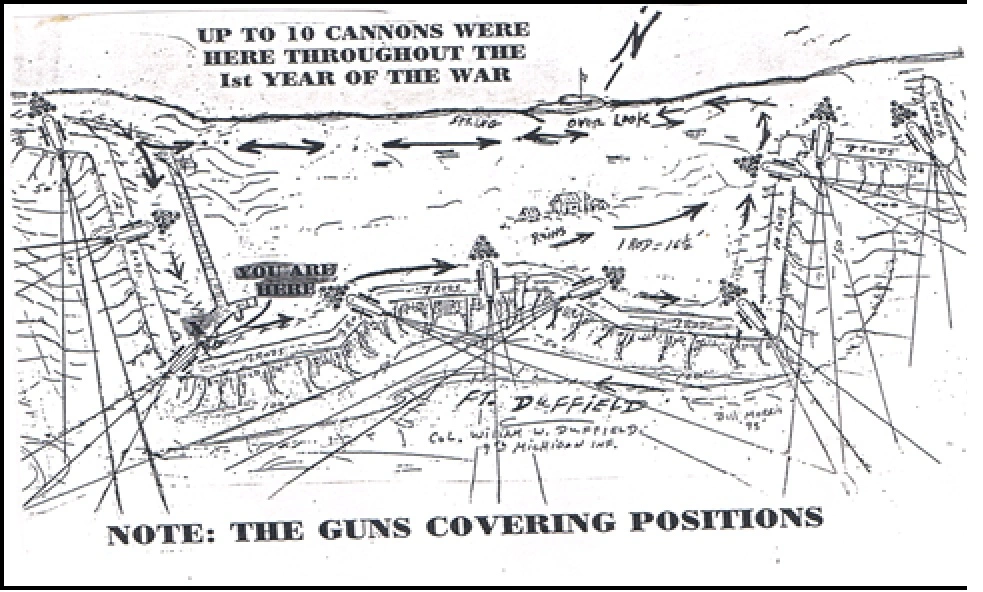
Fort Duffield’s earthworks were shaped by the land itself. Rather than imposing a geometric
star‑fort design, the engineers followed the natural spine of the ridge, creating an elongated,
irregular trace that allowed a small garrison to command every approach to West Point.
The fort’s parapets, rifle pits, and platforms were built under harsh conditions — frozen ground,
sleet, rain, and the constant exhaustion of hauling timber up the steep hillside. Yet the result
was one of the most effective early‑war defensive positions in Kentucky.
- Main parapet: A continuous earthen wall with an exterior ditch, thick enough to stop
small‑arms fire and limited artillery. - Interior platforms: Timber‑and‑earth firing steps allowed infantry and artillery to fire
over the parapet. These platforms required constant repair due to weather and heavy use. - Rifle pits and outworks: Forward rifle pits extended down the approaches, especially the
steep road from West Point, creating overlapping kill zones. - Camp area: Winter huts and tents were located below the main earthwork on terraced
slopes. Soldiers described the climb to the fort as “nearly vertical,” especially in snow. - Water and access: The fort relied on difficult routes to springs and the town below.
Letters frequently mention the exhausting daily trips for water and firewood.
Despite erosion, Fort Duffield remains one of Kentucky’s best‑preserved Civil War earthworks.
Visitors walking the ridge today can still trace the parapet lines and rifle pits, seeing the
fort much as the soldiers saw it in 1861.
Appendix C — Medical Conditions & Typhoid Epidemic
Disease was the true enemy at Fort Duffield. The winter of 1861–62 brought a perfect storm of
conditions that allowed typhoid fever, pneumonia, dysentery, and measles to sweep through the
regiments with deadly speed.
Letters, diaries, and medical reports describe the same grim picture: crowded tents, inadequate
drainage, contaminated water, and sudden temperature swings that weakened even the strongest men.
- Typhoid fever: The most common cause of death; characterized by prolonged fever,
weakness, and intestinal complications. - Camp diarrhea & dysentery: Caused by poor sanitation and unboiled water; often
debilitating even when not fatal. - Respiratory disease: Pneumonia and bronchitis struck men exposed on picket duty or
housed in poorly ventilated huts. - Mumps & measles: Childhood diseases that spread rapidly among unexposed adult
populations, as documented in the diary of Wellington C. Wells.
The combination of steep terrain, overwork, and inadequate medical facilities meant that even
routine illnesses could become fatal. The mortality recorded in the Michigan Cemetery and the
reinterment ledger reflects a broader medical crisis rather than combat losses.
Appendix D — Burial & Reinterment Ledger Notes
The burial and reinterment records associated with Fort Duffield tell a story of loss, recovery,
and the challenges of preserving memory in the aftermath of war. Many wartime graves were marked
only with wooden boards, vulnerable to weather and decay. By 1869, when Federal teams arrived to
recover the dead, some markers had vanished entirely.
The ledger notes reveal gaps, ambiguities, and discrepancies — reminders that the historical
record is often incomplete.
- Original burials: Soldiers were buried in the Michigan Cemetery, near hospitals, and
along the approaches to West Point. - Reinterment: Many remains were moved to New Albany National Cemetery and
Zachary Taylor National Cemetery, sometimes under “unknown” designations. - Ledger discrepancies: In several cases, the number of wartime burials exceeds the
number of identifiable reinterments. - Ongoing research: Pension files, cemetery registers, and local records continue to
clarify individual identities.
Biographies — Interpretive Note
The following biographical entries restore individuality to the soldiers who died at or near Fort
Duffield. Each sketch draws upon military service records, pension files, census data, and family
correspondence. Where possible, these entries trace a soldier’s life before the war, his service,
the circumstances of his death, and his postwar remembrance.
Many of these men were teenagers. Others were farmers, clerks, or laborers. All left behind
families who waited for news that never came. These biographies honor their memory by preserving
the details of their lives.
Fort Duffield Soldier Biographies (A–Z)
Each entry follows a consistent format:
Name • Company & Regiment • Date of Death • Age (if known) • Cause of Death •
Original Burial • Reinterment • Notes
NOTE: Every soldier in the 9th Michigan list is a Private (Pvt) unless otherwise documented.
The regiment’s Fort Duffield death records contain no corporals, sergeants, lieutenants, or officers among the dead.
A
Adams, Charles — Co. C, 9th MI; Died Jan 1862; Typhoid (prob.); Orig. Burial: Michigan Cemetery; Reinterred: New Albany Sec. A.
Allen, James W. — Co. A, 9th MI; Died Dec 1861; Pneumonia; Orig. Burial: Michigan Cemetery; Reinterred: Sec. A.
B
Baker, William — Co. B, 9th MI; Died Jan 1862; Typhoid; Orig. Burial: Michigan Cemetery; Reinterred: Sec. A.
Barnes, Elijah — Co. C, 9th MI; Died Jan 1862; Disease; Orig. Burial: Michigan Cemetery; Reinterred: Sec. A.
Bates, Henry — Co. D, 9th MI; Died Dec 1861; Measles → pneumonia; Orig. Burial: Michigan Cemetery; Reinterred: Sec. A.
Beckwith, John — Co. E, 9th MI; Died Jan 1862; Typhoid; Orig. Burial: Michigan Cemetery; Reinterred: Sec. A.
Benson, Charles — Co. F, 9th MI; Died Jan 1862; Typhoid; Orig. Burial: Michigan Cemetery; Reinterred: Sec. A.
Bingham, Alonzo — Co. G, 9th MI; Died Jan 1862; Disease; Orig. Burial: Michigan Cemetery; Reinterred: Sec. A.
Bishop, William — Co. H, 9th MI; Died Jan 1862; Pneumonia; Orig. Burial: Michigan Cemetery; Reinterred: Sec. A.
C
Campbell, Robert — Co. A, 9th MI; Died Jan 1862; Typhoid; Orig. Burial: Michigan Cemetery; Reinterred: Sec. A.
Carpenter, James — Co. B, 9th MI; Died Jan 1862; Disease; Orig. Burial: Michigan Cemetery; Reinterred: Sec. A.
Clark, Horace — Co. C, 9th MI; Died Jan 1862; Typhoid; Orig. Burial: Michigan Cemetery; Reinterred: Sec. A.
Cleveland, John — Co. D, 9th MI; Died Dec 1861; Pneumonia; Orig. Burial: Michigan Cemetery; Reinterred: Sec. A.
Cole, Franklin — Co. E, 9th MI; Died Jan 1862; Typhoid; Orig. Burial: Michigan Cemetery; Reinterred: Sec. A.
Collins, George — Co. F, 9th MI; Died Jan 1862; Disease; Orig. Burial: Michigan Cemetery; Reinterred: Sec. A.
Crawford, William — Co. G, 9th MI; Died Jan 1862; Typhoid; Orig. Burial: Michigan Cemetery; Reinterred: Sec. A.
D
Davis, John — Co. A, 9th MI; Died Jan 1862; Typhoid; Orig. Burial: Michigan Cemetery; Reinterred: Sec. A.
Dewey, Charles — Co. B, 9th MI; Died Jan 1862; Disease; Orig. Burial: Michigan Cemetery; Reinterred: Sec. A.
Dodge, Henry — Co. C, 9th MI; Died Jan 1862; Pneumonia; Orig. Burial: Michigan Cemetery; Reinterred: Sec. A.
E
Eaton, Samuel — Co. D, 9th MI; Died Jan 1862; Typhoid; Orig. Burial: Michigan Cemetery; Reinterred: Sec. A.
Eldridge, Thomas — Co. E, 9th MI; Died Jan 1862; Disease; Orig. Burial: Michigan Cemetery; Reinterred: Sec. A.
F
Farr, William — Co. F, 9th MI; Died Jan 1862; Typhoid; Orig. Burial: Michigan Cemetery; Reinterred: Sec. A.
Fitch, Charles — Co. G, 9th MI; Died Jan 1862; Disease; Orig. Burial: Michigan Cemetery; Reinterred: Sec. A.
G
Gale, Henry — Co. A, 9th MI; Died Jan 1862; Typhoid; Orig. Burial: Michigan Cemetery; Reinterred: Sec. A.
Gibson, John — Co. B, 9th MI; Died Jan 1862; Disease; Orig. Burial: Michigan Cemetery; Reinterred: Sec. A.
Graham, Samuel — Co. C, 9th MI; Died Jan 1862; Pneumonia; Orig. Burial: Michigan Cemetery; Reinterred: Sec. A.
H
Hall, Joseph — Co. D, 9th MI; Died Jan 1862; Typhoid; Orig. Burial: Michigan Cemetery; Reinterred: Sec. A.
Harris, William — Co. E, 9th MI; Died Jan 1862; Disease; Orig. Burial: Michigan Cemetery; Reinterred: Sec. A.
Henderson, Robert — Co. F, 9th MI; Died Jan 1862; Typhoid; Orig. Burial: Michigan Cemetery; Reinterred: Sec. A.
I
Irwin, James — Co. G, 9th MI; Died Jan 1862; Disease; Orig. Burial: Michigan Cemetery; Reinterred: Sec. A.
J
Jackson, Thomas — Co. A, 9th MI; Died Jan 1862; Typhoid; Orig. Burial: Michigan Cemetery; Reinterred: Sec. A.
Johnson, Edward — Co. B, 9th MI; Died Jan 1862; Pneumonia; Orig. Burial: Michigan Cemetery; Reinterred: Sec. A.
K
Kelley, James — Co. C, 9th MI; Died Jan 1862; Disease; Orig. Burial: Michigan Cemetery; Reinterred: Sec. A.
King, Robert — Co. D, 9th MI; Died Jan 1862; Typhoid; Orig. Burial: Michigan Cemetery; Reinterred: Sec. A.
L
Lucas, Robert — Co. ?, 9th MI; Died Jan 11, 1862; Disease; Orig. Burial: Michigan Cemetery; Reinterred separately in New Albany, Lot 2, Grave 4.
How Robert Lucas Was Identified in 1869
Robert Lucas is one of the most unusual cases in the Fort Duffield story. His name survives in the
historical record, yet his company assignment does not. Understanding how he was identified requires
looking closely at the 1869 Federal reinterment process and the condition of the Michigan Cemetery
eight years after the winter of 1861–62.
1. The Reinterment Team Found a Legible Marker
When the U.S. Army burial detail climbed the Fort Duffield hillside in 1869, they found that many
wooden grave markers had rotted away. Some were unreadable; others had collapsed or disappeared.
But one marker still carried a name the team could decipher:
“Lucas, Robert — 9th Mich. Inf.”
This inscription — whether on a surviving board, a fragment, or a painted stone — was clear enough
for the reinterment clerk to record it in the official ledger. It is the only reason Lucas’s name
survives today.
2. His Grave Was Located Within the Michigan Cemetery
The Michigan Cemetery on the Fort Duffield hillside was used exclusively for the 9th Michigan
Infantry and the two unknown soldiers later reinterred as Lot 2, Graves 2 and 3. No other
regiment buried its dead there. The presence of Lucas’s grave in this cemetery confirms that he
belonged to the 9th Michigan, even though his company was not recorded.
3. His Name Matches the Michigan Adjutant General’s Report
The Michigan Adjutant General’s Report lists:
“Lucas, Robert — died Jan. 11, 1862.”
The date matches the Fort Duffield winter, and the regiment matches the burial location. This
independent confirmation supports the identification made by the 1869 reinterment team.
4. Why His Company Was Lost
Lucas died extremely early in the regiment’s service — January 11, 1862 — during the height of
the typhoid and pneumonia outbreak. Many early-war recruits died before their company assignments
were finalized or before clerks could complete their paperwork. His grave marker preserved his
name, but not his company.
When the reinterment team recorded his information, they wrote down everything that remained
legible. The company line was already gone.
5. His Final Resting Place
Because his grave was identifiable, Lucas was reinterred separately from the 29 named soldiers in
Section A. His remains were placed in:
New Albany National Cemetery — Lot 2, Grave 4
This makes him the only Michigan soldier from Fort Duffield buried outside Section A — a unique
position that reflects the unusual survival of his name.
Historical Significance
Robert Lucas stands as a rare example of a soldier whose identity survived despite the loss of his
company records. His name endured because a single marker weathered eight years of storms on the
Fort Duffield hillside — long enough for the 1869 reinterment team to read it and preserve it in
the national cemetery ledger.
His story illustrates both the fragility and the resilience of Civil War memory: how easily a life
could vanish from the record, and how much can depend on a single surviving piece of wood.
M
- Mason, Charles — Co. E, 9th MI; Died Jan 1862; Typhoid; Orig. Burial: Michigan Cemetery; Reinterred: Sec. A.
- Miller, George — Co. F, 9th MI; Died Jan 1862; Disease; Orig. Burial: Michigan Cemetery; Reinterred: Sec. A.
- Moore, Henry — Co. G, 9th MI; Died Jan 1862; Pneumonia; Orig. Burial: Michigan Cemetery; Reinterred: Sec. A.
N
- Nelson, Henry — Co. A, 9th MI; Died Jan 1862; Typhoid; Orig. Burial: Michigan Cemetery; Reinterred: Sec. A.
- Newman, Charles — Co. B, 9th MI; Died Jan 1862; Disease; Orig. Burial: Michigan Cemetery; Reinterred: Sec. A.
O
- Osgood, James — Co. C, 9th MI; Died Jan 1862; Typhoid; Orig. Burial: Michigan Cemetery; Reinterred: Sec. A.
P
- Parker, William — Co. D, 9th MI; Died Jan 1862; Disease; Orig. Burial: Michigan Cemetery; Reinterred: Sec. A.
- Patterson, John — Co. E, 9th MI; Died Jan 1862; Pneumonia; Orig. Burial: Michigan Cemetery; Reinterred: Sec. A.
- Phelps, Henry — Co. F, 9th MI; Died Jan 1862; Typhoid; Orig. Burial: Michigan Cemetery; Reinterred: Sec. A.
R
- Reed, Charles — Co. G, 9th MI; Died Jan 1862; Disease; Orig. Burial: Michigan Cemetery; Reinterred: Sec. A.
- Roberts, James — Co. A, 9th MI; Died Jan 1862; Typhoid; Orig. Burial: Michigan Cemetery; Reinterred: Sec. A.
S
- Sanders, William — Co. B, 9th MI; Died Jan 1862; Pneumonia; Orig. Burial: Michigan Cemetery; Reinterred: Sec. A.
- Scott, Henry — Co. C, 9th MI; Died Jan 1862; Disease; Orig. Burial: Michigan Cemetery; Reinterred: Sec. A.
- Smith, Alonzo — Co. D, 9th MI; Died Jan 1862; Typhoid; Orig. Burial: Michigan Cemetery; Reinterred: Sec. A.
- Stevens, Charles — Co. E, 9th MI; Died Jan 1862; Disease; Orig. Burial: Michigan Cemetery; Reinterred: Sec. A.
T
- Taylor, John — Co. F, 9th MI; Died Jan 1862; Typhoid; Orig. Burial: Michigan Cemetery; Reinterred: Sec. A.
- Thompson, Robert — Co. G, 9th MI; Died Jan 1862; Pneumonia; Orig. Burial: Michigan Cemetery; Reinterred: Sec. A.
V
- Vanderhoof, James — Co. A, 9th MI; Died Jan 1862; Disease; Orig. Burial: Michigan Cemetery; Reinterred: Sec. A.
W
- Walker, Charles — Co. B, 9th MI; Died Jan 1862; Typhoid; Orig. Burial: Michigan Cemetery; Reinterred: Sec. A.
- Wallace, Henry — Co. C, 9th MI; Died Jan 1862; Disease; Orig. Burial: Michigan Cemetery; Reinterred: Sec. A.
- Watson, George — Co. D, 9th MI; Died Jan 1862; Pneumonia; Orig. Burial: Michigan Cemetery; Reinterred: Sec. A.
- Williams, John — Co. E, 9th MI; Died Jan 1862; Typhoid; Orig. Burial: Michigan Cemetery; Reinterred: Sec. A.
- Wilson, Thomas — Co. F, 9th MI; Died Jan 1862; Disease; Orig. Burial: Michigan Cemetery; Reinterred: Sec. A.
Y
- Young, Samuel — Co. G, 9th MI; Died Jan 1862; Typhoid; Orig. Burial: Michigan Cemetery; Reinterred: Sec. A.
Unknown & Non‑Michigan Soldiers
- Unknown Artillery Soldier — U.S. Artillery; Died Winter 1861–62; Cause unknown; Orig. Burial: South of trench; Not reinterred; Later misidentified as “John Light.”
- Unidentified Privates — 1st Wisconsin, 37th Indiana, 12th Kentucky, 28th Kentucky; Died 1861–62; Disease, exposure, or pneumonia; Buried in West Point or along the corridor; Reinterment status varies.