The Naming of Fort Duffield
Explore Fort Duffield
Follow the fort’s early development, learn about the people connected to it, or explore the
research and primary sources that reveal its story.
Origins & Early History
How Fort Duffield was built and why it mattered in 1861–62.
Construction of the Fort
The labor, engineering, and hardship behind building the fort.
Timeline 1861–1862
A chronological look at troop movements and command decisions.
Garrison Life
Daily routines, hardships, slang, and soldier culture.
Strategic Tension
How a fort that never fired a shot still shaped the war.
The Naming of Fort Duffield
How the fort received its wartime and modern names.
Fort Duffield, the largest Civil War earthen fortress in Kentucky, stands high above West Point
at the meeting of the Salt and Ohio Rivers. Though the fort’s earthworks were carved into this
ridge during the winter of 1861–62, the name “Fort Duffield” reflects both its Civil War origins
and the modern efforts to preserve its story.
In the early 1990s, the Fort Duffield Heritage Committee formally named the restored site in
honor of Colonel William Ward Duffield, the officer whose regiment built the original defenses.
earthworks, they did so under the leadership and influence of Colonel William W. Duffield and the
9th Michigan Infantry. The name preserves their presence on this ridge.
The Civil War Naming
Construction of the fort began in early November 1861. Most of the work was performed by the men
of the 9th Michigan Infantry Regiment, commanded by Colonel William W. Duffield. At the
time, the fort was named in honor of his father, Reverend George Duffield, a respected
Michigan clergyman.
Colonel Duffield’s younger brother, Lieutenant Henry M. Duffield, also served at the fort.
Henry later authored a book documenting the lives and exploits of the earliest recipients of the
Congressional Medal of Honor, which was created during the Civil War.
Who Was William W. Duffield?
Soldier, Engineer, and Public Servant
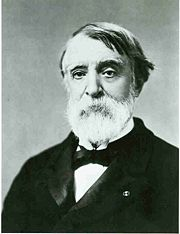
William Ward Duffield was born in Carlisle, Pennsylvania, on November 19, 1824, the son of
Reverend George Duffield and Isabella Bethubne Duffield. He graduated from Columbia University
in 1843 with a degree in engineering and married Annie Louise Ladue in 1854. They had two
children: Will Ward Duffield (1858–1939) and Louise Angel Duffield (1855–1941).
Duffield fought in the Mexican War with a Tennessee regiment and later traveled to California
as a paymaster, becoming a founding member of the Society of California Pioneers. When the Civil
War began, he recruited a unit and briefly commanded the 3rd Michigan Infantry before resigning.
In October 1861, he assumed command of the 9th Michigan Infantry Regiment as a Colonel.
Known for fairness and discipline, Duffield was appointed to the Military Board of Review in
January 1862. He authored School of the Brigade and the Evolution of the Line that same year.
He served as Military Commander of the State of Kentucky in May and June 1862 and was promoted
to Brigadier General. Later that year, he was wounded and captured at the Battle of Murfreesboro,
Tennessee, and discharged after a long recovery.
After the war, Duffield managed coal mines in Pennsylvania, Michigan, and Kentucky and surveyed
railroads. In 1894, he was appointed head of the U.S. Coast & Geodetic Survey in Washington, D.C.
He left office after President McKinley’s election and lived in Washington until his death in
June 1907. He is buried in Section 3 of Arlington National Cemetery.
Although Colonel Duffield never personally commanded the fort, his regiment cleared the timber,
hauled the dirt, and endured the bitter winter that shaped these earthworks. His leadership
defined the men who built this place.
Why This Name?
During the Civil War, naming a fort was a way to honor the individuals whose leadership or
sacrifice shaped a military position. The original wartime name recognized Reverend George
Duffield. The modern name honors Colonel William W. Duffield and the soldiers of the 9th Michigan
Infantry who built the fort under his command.
By restoring the name “Fort Duffield,” the Heritage Committee ensured that the story of these
men — their labor, hardship, and presence on this ridge — would not be forgotten.
A Legacy Preserved
Today, “Fort Duffield” stands as a tribute not only to Colonel Duffield but to the young soldiers
who endured harsh weather, illness, and exhausting work to build this stronghold. The name
preserves their memory and connects modern visitors to the lives lived here more than 160 years
ago.
← Back to Origins & Early History
© 2026 Fort Duffield • Origins and Early History