Camp Knox, and the growth of Fort Knox reshaped the town’s landscape and daily life. What had
once been a quiet river community became a crossroads of military training, transportation,
and resilience.
Camp Knox Comes to West Point (1918)
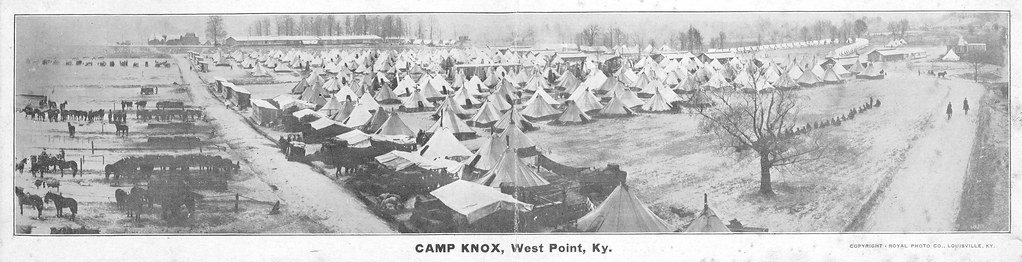
In 1918, during World War I, the U.S. Army established Camp Knox as an artillery
training center. Much of the early camp activity took place directly in and around West Point.
Fields that once held crops were filled with rows of canvas tents, horse teams, wagons, and
the Army’s first motorized vehicles.
Thousands of soldiers marched through West Point’s streets, drilled on the river bottoms, and
used the surrounding hills for observation and artillery practice. The town’s quiet rhythm
shifted as military life became part of the community’s daily soundscape.
Stithton and the Expansion of Camp Knox
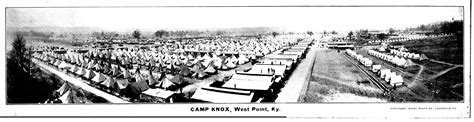
South of West Point lay the small community of Stithton, which was absorbed into Camp
Knox during World War I. Homes, farms, and businesses were purchased by the government as the
camp expanded. The area later became the heart of Fort Knox, including its headquarters,
barracks, and training facilities.
The transformation of Stithton marked the beginning of Fort Knox’s long‑term presence — a
presence that would shape the region for generations.
Field Artillery Brigade Firing Center
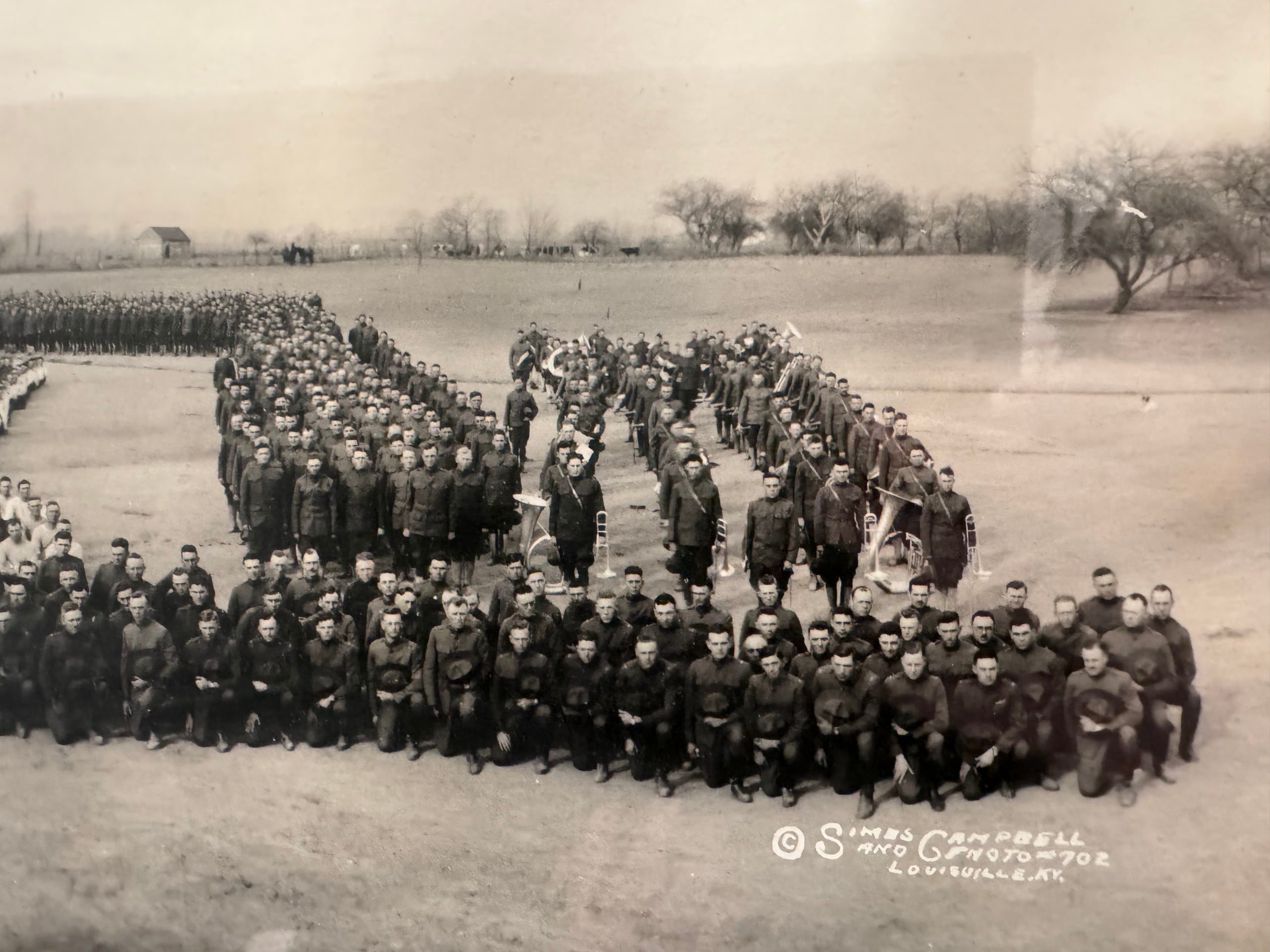
One of the most iconic images of early Camp Knox shows soldiers forming large letters and
unit symbols on the West Point training grounds. These formations were photographed from the
surrounding hills and used for documentation, morale, and recruitment.
Artillery Training on the West Point Flats
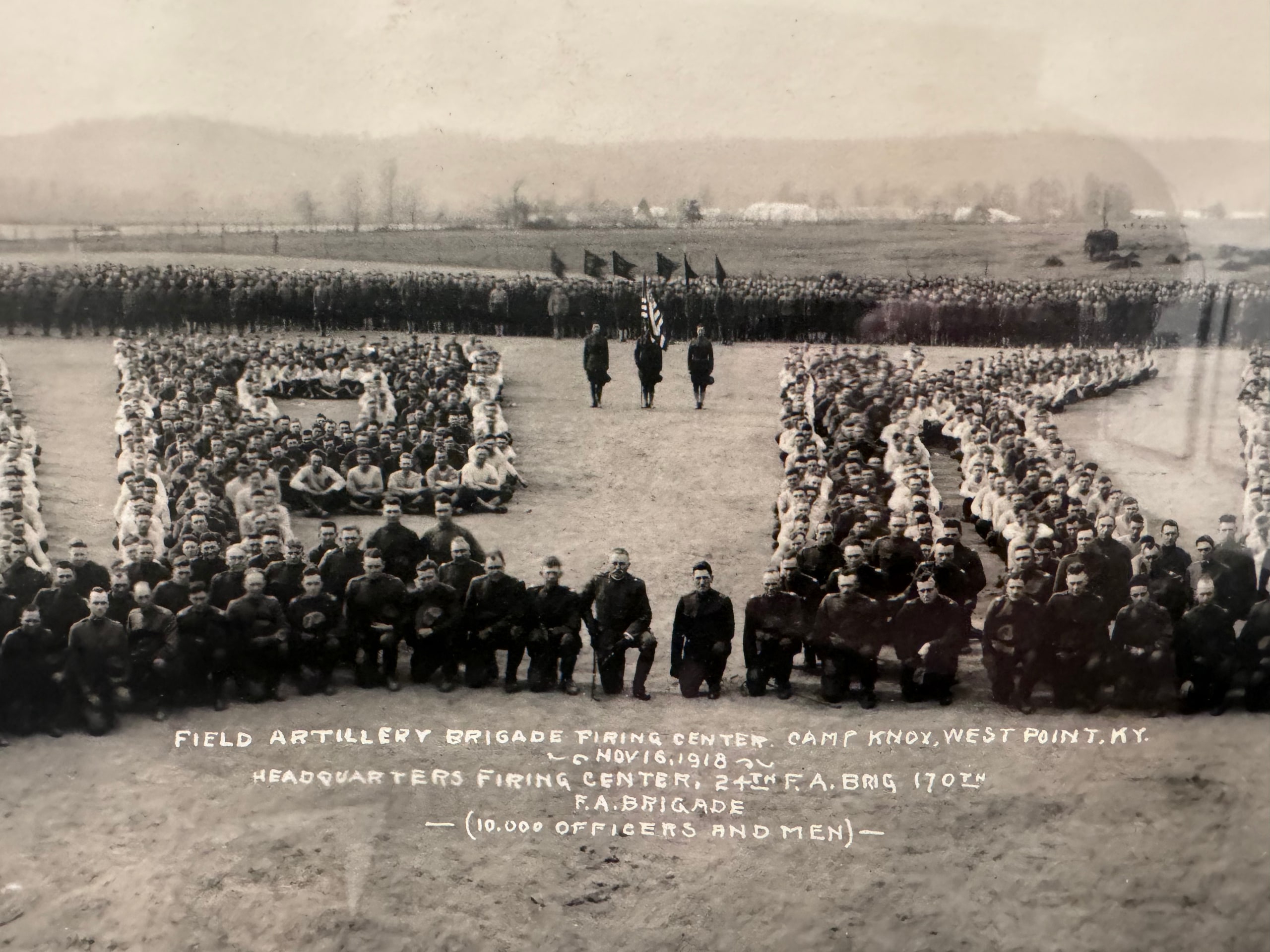
A second formation photograph shows the scale of Camp Knox’s early training operations.
Soldiers arranged themselves into symbols and letters representing their artillery units,
creating striking images that remain some of the best visual records of the camp’s West
Point era.
Camp Knox, Fort Knox, and a Changing Town
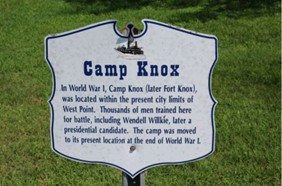
After World War I, Camp Knox evolved into a permanent military installation. Soldiers and
civilian workers passed through West Point daily, bringing new business to stores, boarding
houses, and restaurants.
During the Great Depression and World War II, Fort Knox became one of the most important
military posts in the nation. Many West Point residents found employment there, and the
arrival of the U.S. Bullion Depository in 1936 drew national attention to the region.
The 20th century reshaped West Point — not through battles or industry, but through the steady
presence of the U.S. Army and the resilience of a community adapting to change.

© 2026 Fort Duffield • History Section