became a vast artillery training landscape. Soldiers drilled, marched, fired, and maneuvered
across terrain that had once been farmland and river bottom. The photographs taken here remain
some of the most iconic images of early Camp Knox.
Training on the West Point Flats
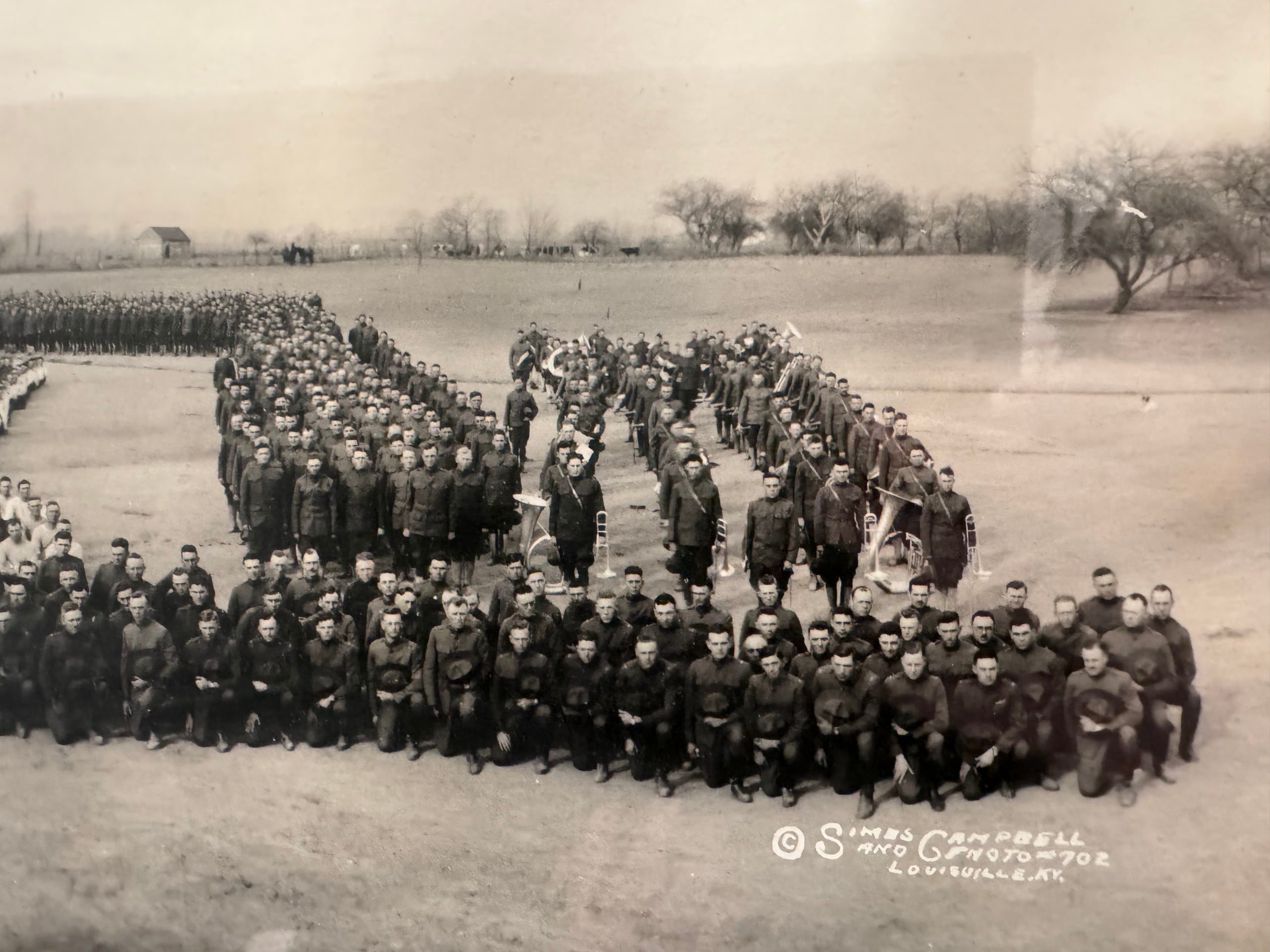
The wide, level ground near West Point was ideal for artillery training. Here, soldiers
practiced maneuvering guns, limbers, caissons, and horse teams. The flats also served as
assembly areas for large formations — including the dramatic unit symbols photographed from
the surrounding hills.
These images were used for documentation, morale, and recruitment. They remain some of the
clearest visual records of the early Camp Knox era.
Symbols on the Landscape
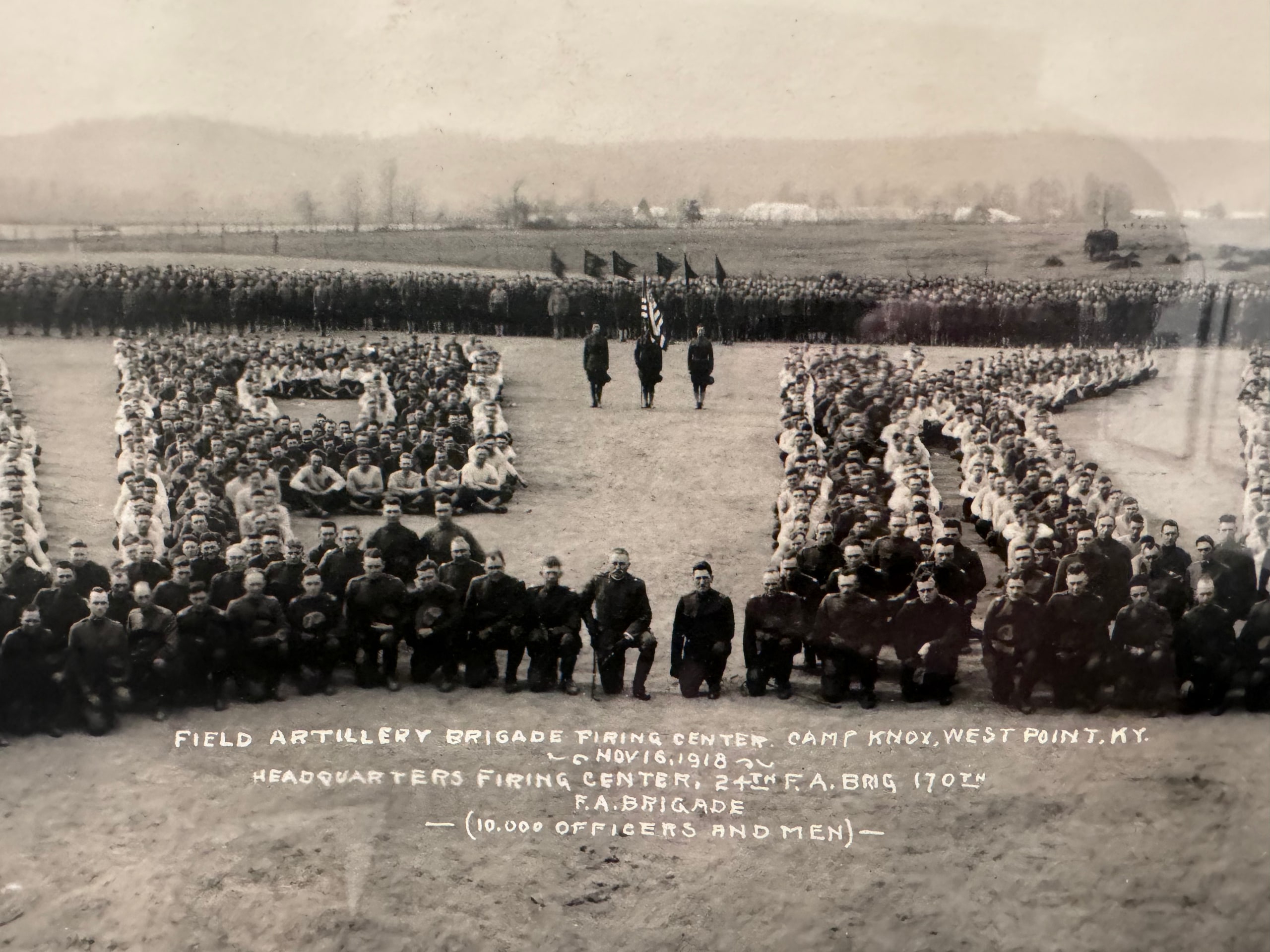
A second formation photograph shows the scale and precision of these early training exercises.
Soldiers arranged themselves into enormous letters and insignia representing their artillery
brigades. The images capture both the discipline of the troops and the vastness of the
training grounds.
These formations were unique to the West Point phase of Camp Knox — a moment when the Army
was experimenting with new ways to document and promote its rapidly expanding forces.
Artillery in Transition
military history. Horse‑drawn guns, wagons, and caissons still dominated the landscape, but
early motorized vehicles were beginning to appear. Soldiers trained with both — preparing for
a modern war with tools from two eras.
The terrain around West Point offered everything the Army needed: open flats for maneuvering,
hills for observation, and river bottoms for large encampments. These features made the area
an ideal training ground and helped shape the future of Fort Knox.
© 2026 Fort Duffield • History Section