Note: Do not drink the water here- remember Soldiers died from water borne diseases,
Historic View
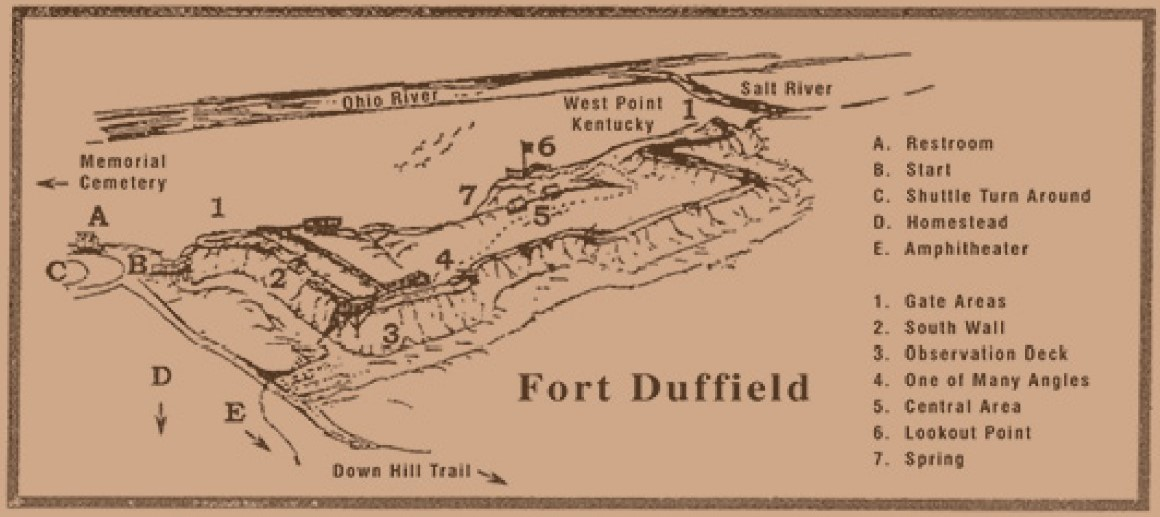
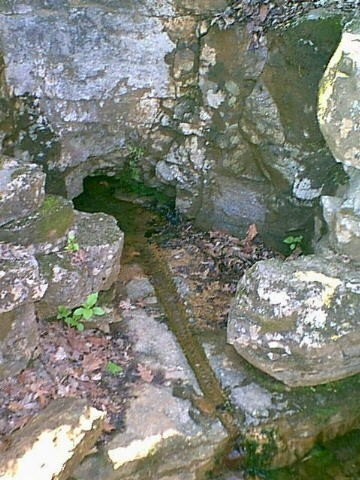
This spring, which would have proved invaluable if the fort had ever been brought under siege, was dug and blasted out of the hillside by the soldiers of Fort Duffield. It provided fresh drinking water year‑round.
If you were to visit the fort today, you can still see the drill‑hole markings and the
hand‑cut channel in the stone. The channel carried overflow water from one basin to
the other.
What Happened Here
Fort Duffield Spring — “Cut from Stone, Carved by Resolve”
In the winter of 1861–1862, Union soldiers of the 9th Michigan Infantry carved this spring
into the hillside north of Fort Duffield. Using hand tools and black powder, they blasted
through limestone to create a reliable source of fresh water — essential for survival atop
Muldraugh Hill.
Soldier‑Crafted Engineering
Drill marks and a hand‑cut channel remain visible today, guiding overflow from one basin
to another. These features reflect the ingenuity and determination of the men who built
not just a fort, but a lifeline.
A Quiet Testament
The spring endures as a symbol of endurance and foresight. It was never just water — it was hope carved into stone.
“We built high above the river, but it was the spring that kept us alive.”
— Attributed to a soldier of the 9th Michigan Infantry
The spring was essential not only for drinking water but also for cooking, cleaning, and
caring for the sick. Soldiers made repeated trips throughout the day, often in harsh
weather, navigating the slippery hillside with heavy loads. The path to the spring became
one of the most traveled routes in the fort.
Letters and diaries from Civil War camps across Kentucky describe the constant struggle to
secure clean water. Contaminated sources could spread disease quickly, so a dependable
spring like this one was a blessing — though it came at the cost of labor and exposure to
the elements.
The terrain you see today still reflects the challenges faced by the men who relied on this
spring. The slope, the distance, and the narrow approach all speak to the daily effort
required to sustain a garrison perched high on a ridge.
Listen or Explore More
Audio Narration
Hear how the spring supported daily life and survival at Fort Duffield.
Primary Sources & Research
Documents Related to the Spring
Archival materials for this stop are being prepared. These will include soldier accounts, engineering notes, and medical records related to water supply, disease, and daily routines at Fort Duffield.
Research update coming soon.